10 Kitchen Storage Hacks Ideas
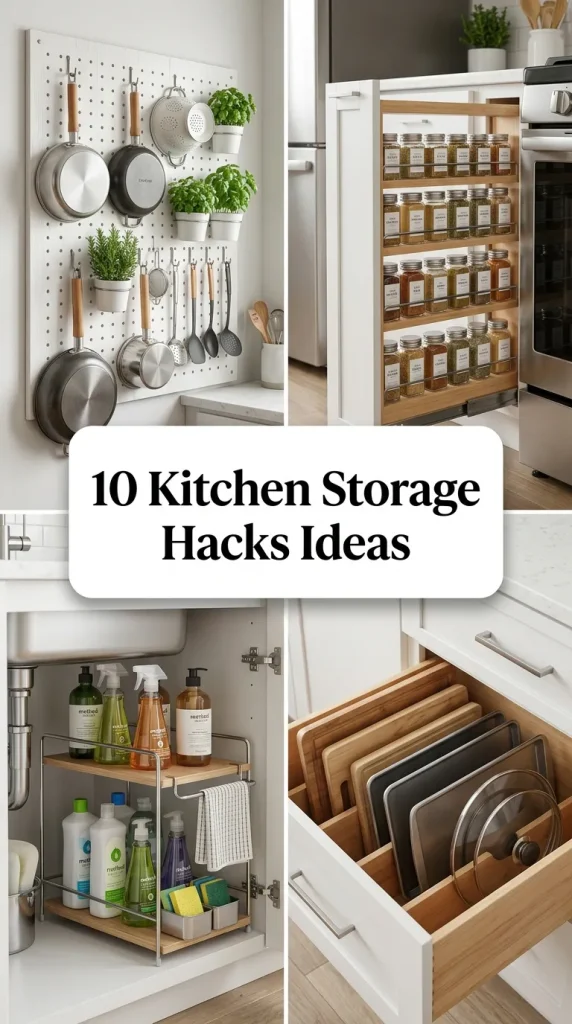
Kitchen Storage Hacks Ideas
Maximizing efficiency in a culinary workspace requires a structured approach to inventory management and spatial planning. On visual platforms like Pinterest, strategic kitchen storage hacks serve as foundational resources for converting cluttered countertops into streamlined, highly functional environments. Readers will learn how to identify underutilized vertical zones, utilize cabinet interior doors, and arrange dry goods systematically using clear categorization methods. Understanding the geometric constraints of standard cabinetry helps homeowners implement targeted adjustments that improve physical accessibility and cooking workflows. This comprehensive guide delivers actionable storage configurations that function as straightforward home decor adjustments, regardless of current architectural limitations. By focusing on structural organization and durable sorting tools, these concepts transform chaotic food preparation zones into orderly spaces that follow modern design principles.
Contemporary home organization prioritizes intelligent, space-saving systems that streamline daily routines while maintaining an appealing kitchen environment. Innovative storage methods have emerged as trending ideas because they address common household frustrations, such as deep cabinets where items become lost or shallow drawers that jam easily. The practical value of these space solutions lies in their reliance on ergonomics, bringing frequently used cookware into immediate reach while protecting delicate items from damage. For beginners, executing a simple DIY cabinet modification project offers an accessible entry point into home improvement without requiring advanced carpentry skills. This intentional method balances aesthetic harmony with physical utility, providing excellent inspiration for long-term interior planning and daily lifestyle efficiency. Implementing these organization methods allows individuals to customize their workspaces while supporting a clean, minimalist style.
Successful execution of a kitchen organization project depends heavily on thorough surface preparation and acquiring suitable sorting materials before relocating any items. Required materials and tools generally include transparent acrylic bins, tension rods, adhesive utility hooks, label makers, measuring tapes, and basic hand tools like screwdrivers for hardware adjustments. Planning considerations must begin with a complete inventory audit, which involves emptying all shelves to categorize goods by type and expiration dates. Measuring the precise interior depth, width, and height of every drawer and pantry shelf prevents alignment errors when purchasing storage inserts. Cleaning the internal wooden surfaces thoroughly and adjusting shelf heights to accommodate tall appliances guarantees a durable, seamless fit. Stabilizing your storage foundations first ensures that the new organizational systems remain perfectly operational over time.
1. Vertical Baking Sheet Dividers
Step-by-Step Guide
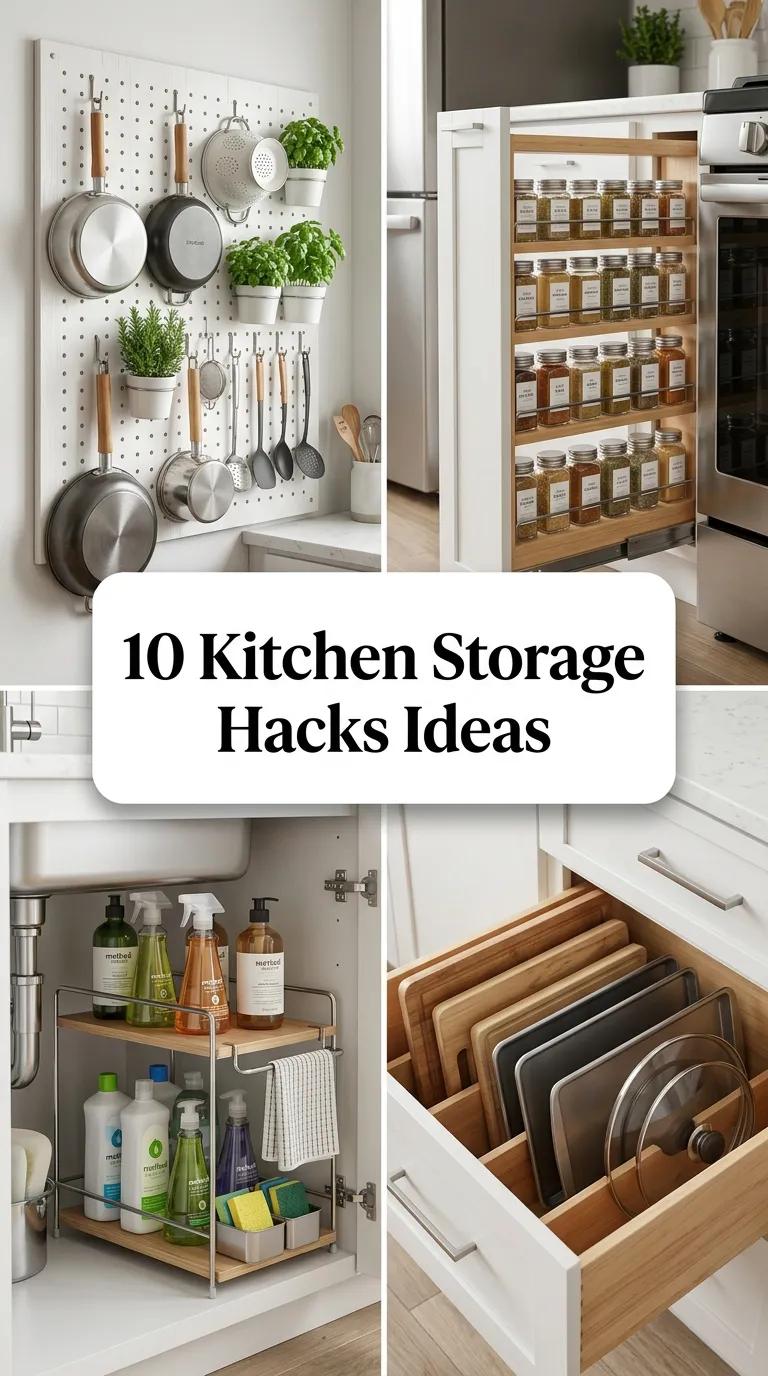
Storing flat baking sheets, muffin tins, and heavy cutting boards horizontally creates unstable stacks that complicate daily item retrieval. To execute this practical organizing project, convert a wide lower cabinet or the deep shelf above the refrigerator into a vertical filing matrix. Install heavy-duty tension rods or slide-in metal divider inserts vertically between the bottom shelf base and the upper cabinet ceiling, spacing them exactly four inches apart. Slide your baking sheets and cutting boards into the newly established narrow vertical slots, placing individual items edge-first rather than stacking them flat. This separation method prevents items from scratching against one another while allowing you to slide out a single tray without disturbing the remaining kitchenware. It serves as an easy project for beginners looking to optimize lower cabinet space while dramatically improving cooking efficiency.

2. Tiered Under-Sink Tension Rods
Setup Method
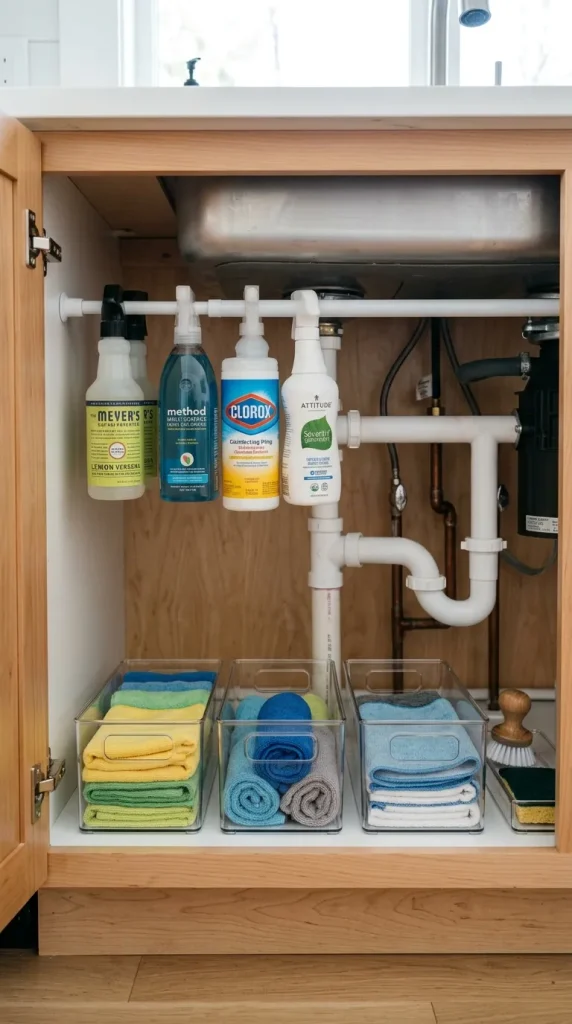
The cavernous space beneath a kitchen sink frequently suffers from chaotic pileups of cleaning sprays, sponges, and microfiber cloths. Resolve this common organization issue by extending a heavy-duty, adjustable spring-tension rod horizontally across the top third of the under-sink cabinet interior. Position the rod roughly six inches below the plumbing lines, tightening it firmly against the left and right wooden walls until it remains perfectly stationary under physical weight. Hang your daily spray bottles directly onto the rod by hooking their trigger mechanisms over the bar, leaving the lower cabinet floor entirely clear for plastic sorting bins. This tiered layout doubles the usable vertical storage space while keeping wet cleaning tools separate from dry backup supplies stored below. The resulting visibility allows homeowners to monitor their household cleaning inventory at a single glance.
3. Deep Drawer Pegboard Matrix Systems
Execution Process
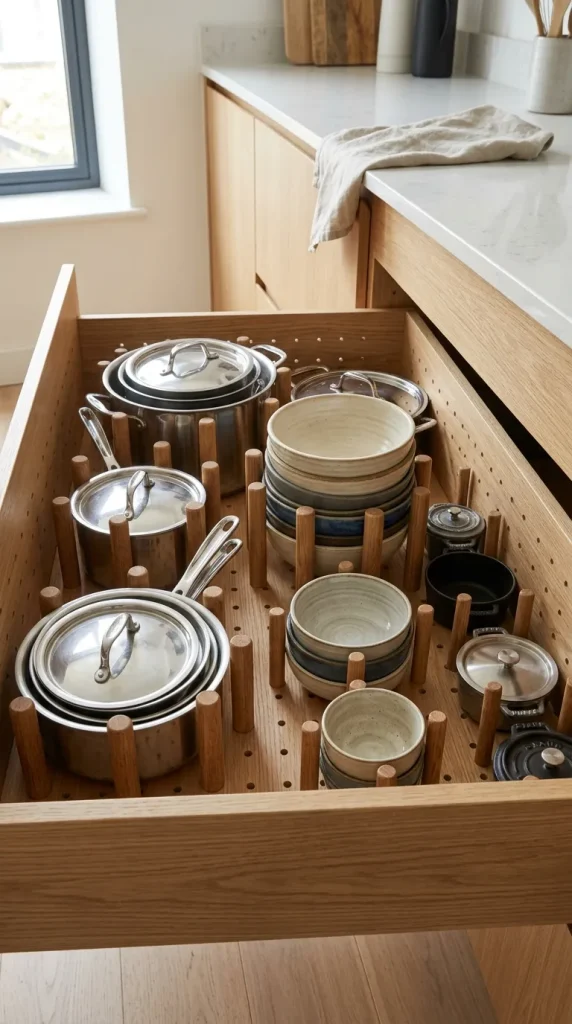
Deep kitchen drawers often turn into disordered storage zones where heavy pots, matching lids, and ceramic bowls slide around during drawer operation. Install a custom-cut wood pegboard insert flat along the interior base of the drawer, securing it with low-profile adhesive strips to prevent shifting. Insert thick wooden dowels or heavy-duty plastic pegs vertically into the pegboard holes, placing them tightly around the perimeter of each pot and bowl stack to create customized boundaries. These physical pegs lock the cookware securely into place, absorbing the inertia of opening and closing movements to eliminate rattling and chipping. This storage modification provides excellent creative ideas for keeping heavy items organized and immediately accessible near the cooking range. It allows for quick reconfigurations whenever you introduce new cookware shapes to your collection.
4. Interior Door Measuring Spoon Mounts
How to Create
Utilizing the unexposed reverse side of upper cabinet doors introduces hidden, highly functional storage space for smaller baking tools like measuring cups and spoons. Coat the inner wooden panel of a designated baking cabinet with a clear satin sealer, then apply a horizontal strip of strong adhesive magnetic tape across the center. Alternatively, install small, evenly spaced adhesive utility hooks across the door surface, maintaining a precise three-inch gap between each hook to prevent item overlap. Suspend your metal measuring spoons and cups individually from the hooks or snap them directly onto the magnetic strip, arranging them sequentially by size. This layout frees up valuable top-drawer space while placing essential measurement tools directly at eye level during food preparation tasks. The clean arrangement supports an organized lifestyle while keeping high-use tools neatly concealed from view.

5. Floating Magnetic Knife Ribbons
Setup Method
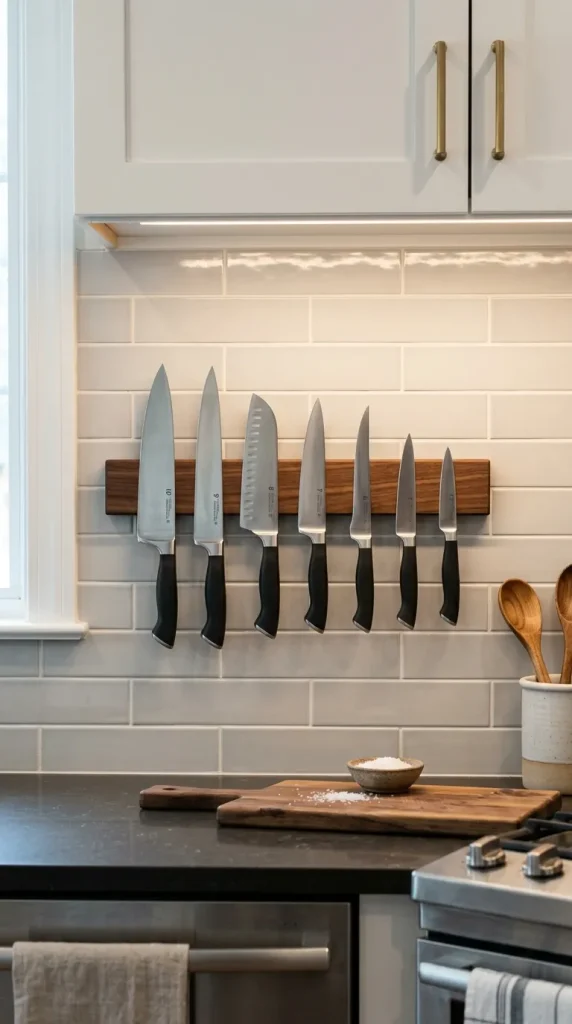
Traditional wooden knife blocks occupy significant countertop surface area and trap moisture within their deep, unventilated internal blade slots. Mount a long, heavy-duty magnetic knife strip made of stainless steel or rich walnut wood directly onto the kitchen backsplash tile. Position the ribbon exactly halfway between the upper cabinet base and the countertop surface, using strong construction adhesive or mounting anchors for a permanent hold. Place the clean blades flat against the magnetic surface with the handles pointing downward, arranging them from the longest chef knife to the shortest paring blade. This hanging method keeps your essential cutting tools perfectly dry, sharp, and entirely clear of the workspace floor. It adds a professional touch to home decor while keeping dangerous edges safely out of reach of lower storage zones.
6. Clear Acrylic Decanted Pantry Grids
Execution Process
Mismatched cardboard cereal boxes, flour sacks, and plastic snack bags create visual chaos and waste space due to irregular product packaging sizes. Empty your dry goods systematically into uniform, airtight containers made of clear acrylic or high-borosilicate glass featuring minimalist style bamboo lids. Arrange these decanted containers onto your pantry shelves in a strict grid formation, placing the tallest jars at the back and shorter containers toward the front. Use a label maker with clear tape to print uniform labels displaying the ingredient name and expiration date, applying them to the front face of each jar. This organization method eliminates hidden air pockets, extends food shelf life, and provides instant clarity regarding remaining food quantities. The uniform transparency elevates basic food storage into a clean design feature.

7. Under-Shelf Suspended Wire Cradles
How to Make
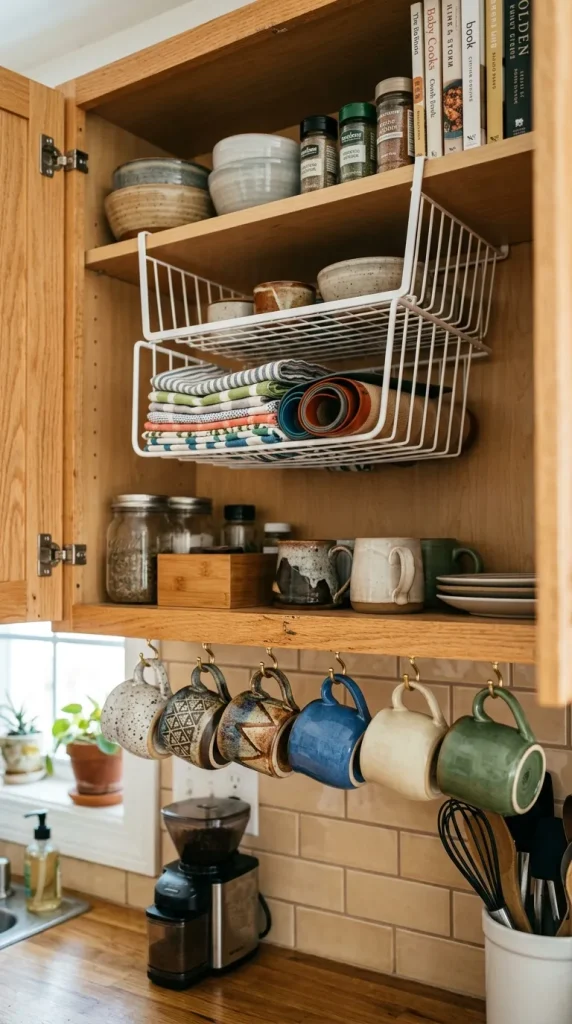
The open space existing between the tops of coffee mugs and the underside of the next cabinet shelf represents valuable, underutilized square footage. Slide a series of vinyl-coated steel under-shelf wire baskets directly onto your existing cabinet shelves, allowing the secondary basket to suspend cleanly underneath. Use these hanging cradles to store flat, lightweight kitchen items such as cloth napkins, silicone baking mats, or boxes of aluminum foil. For coffee cups, install small brass cup hooks directly into the wooden underside of the upper cabinet shelf, spacing them four inches apart to hang mugs by their handles. This stacking alternative prevents you from nesting mugs dangerously on top of each other, reducing the likelihood of handle breakage. It serves as a classic budget project that maximizes storage density without altering cabinetry.
8. Lazy Susan Corner Turnstyles
Setup Method
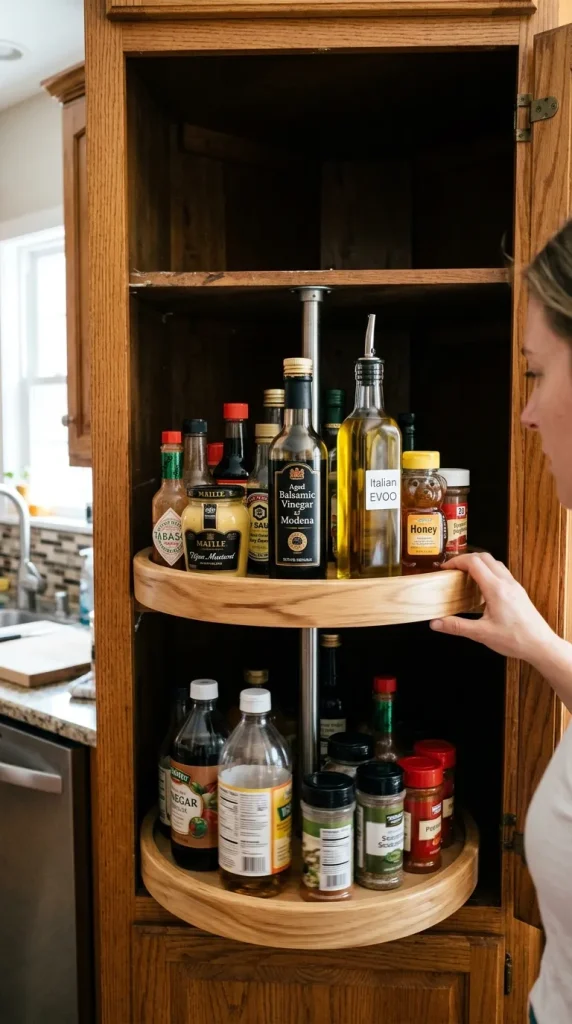
Deep corner cabinets, often called blind corners, are notoriously difficult to navigate because items placed in the rear remain completely hidden from view. Install a dual-tiered rotatable Lazy Susan turntable platform directly onto the base of the corner shelf, ensuring the rotating perimeter clears the door hinges. Arrange your heavy condiment jars, cooking oils, and vinegar bottles upright on the circular turnstyle surface, grouping them by flavor profile or frequency of use. A simple spin of the turntable brings items from the dark back corner directly to the front opening, eliminating the need to remove front rows to access rear supplies. This handmade configuration provides excellent inspiration for managing awkward corner shapes, ensuring that no ingredient is forgotten or left to expire in darkness.
9. Pull-Out Pantry Track Conversions
Step-by-Step Guide
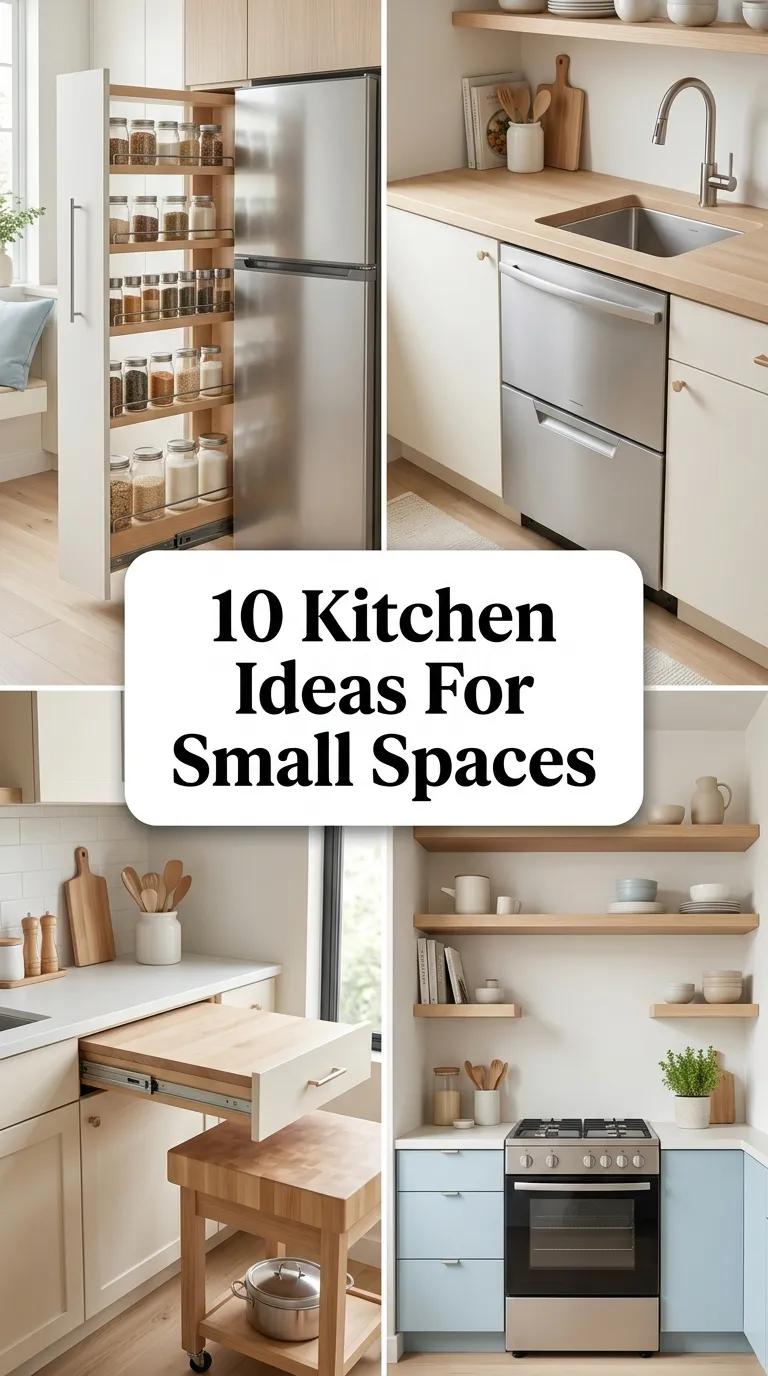
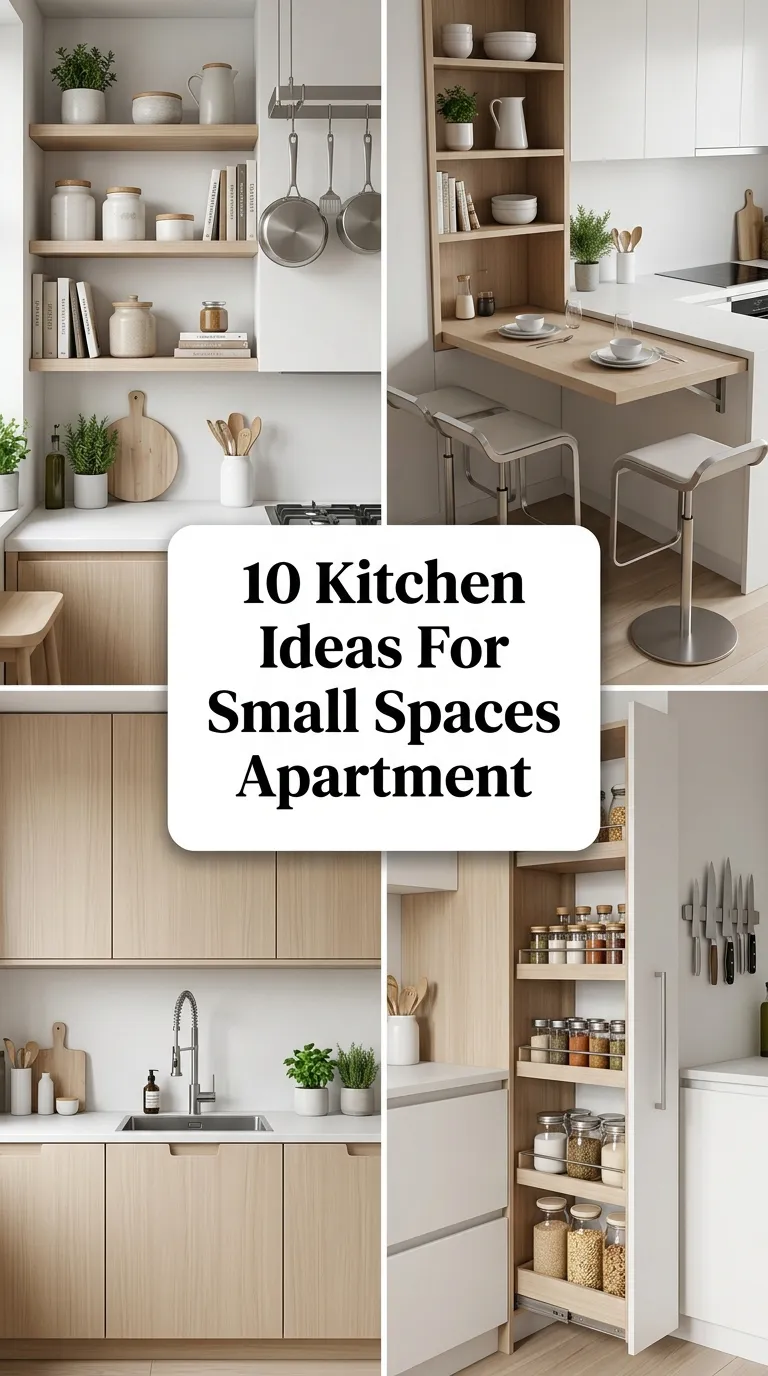
Narrow gaps between the refrigerator and the adjacent wall are typically covered with filler panels, leaving valuable kitchen real estate completely unused. Construct a slim, vertical roll-out storage tower on smooth-rolling casters designed to slide effortlessly into these tight six-inch openings. Assemble a simple multi-tiered wooden frame featuring low guardrails on each shelf to keep spices, canned goods, and jarred sauces from tipping over during movement. Mount a heavy-duty cabinet handle to the front panel, matching the metallic finish of your primary kitchen appliances for visual integration. Slide the entire vertical unit into the narrow gap, pulling it out smoothly whenever you require access to your auxiliary pantry supplies. This advanced DIY project optimizes spatial efficiency, converting an architectural dead zone into a highly functional storage asset.

10. Heavy Appliance Lift Mechanics
How to Create
Stowing heavy stand mixers, food processors, and blenders into low base cabinets requires strenuous lifting that can strain the back during daily food preparation. Install a spring-loaded mechanical appliance lift mechanism inside a standard base cabinet, attaching the heavy-duty metal arms securely to both interior side walls. Fix a sturdy wooden platform to the top of the brackets, placing your heaviest countertop appliance flat on the shelf surface. When you open the cabinet door, the spring-assisted mechanism lifts the heavy appliance upward and outward, locking it securely at standard countertop height. This ergonomic setup method isolates heavy machinery away from prime counter workspace while ensuring it remains instantly deployable without physical strain. It represents an excellent investment for modern kitchens focused on accessibility and clean counter design.

Common Beginner Mistakes and How to Avoid Them
A primary mistake when executing kitchen storage hacks is purchasing organizing containers and plastic bins before measuring cabinet interiors accurately. This often leads to mismatched storage inserts that leave unusable gaps or prevent cabinet doors from closing completely. Always measure twice and sketch a detailed layout plan before acquiring physical organization materials. Another frequent error is failing to group items by frequency of use, which results in everyday plates being trapped behind seasonal serving platters. To avoid this layout trap, reserve prime, eye-level shelves strictly for daily dinnerware and high-use cooking oils. Keep specialty small appliances, holiday bakeware, and bulk refills stored away on the highest shelves or inside deeper basement storage zones. Prioritizing item accessibility according to real-world usage patterns prevents organizational systems from breaking down over time.
Practical Tips for Better Results
Achieving lasting success with home decor storage projects depends on implementing clear, logical zoning rules across the entire kitchen layout. Divide your workspace into five functional zones: consumptions, non-consumptions, preparation, cooking, and cleaning to guide your item placement. Store your pots, cooking spoons, and spices within arm’s reach of the stove surface to streamline active cooking processes. Keep food storage containers, plastic wraps, and sandwich bags grouped together near the refrigerator to simplify the process of packing away leftovers. Additionally, utilizing clear plastic containers rather than opaque baskets ensures that all household members can locate items without rummaging through shelves. This transparency supports long-term kitchen organization and reduces duplicate purchases at the grocery store because inventory levels remain fully visible.
Styling, Presentation, or Organization Ideas
Integrating storage solutions with modern design principles ensures your kitchen looks polished, intentional, and visually cohesive. Choose organizational materials that share a single texture or color palette, such as matching natural bamboo lids, matte black wire baskets, or clear glass jars. This uniformity prevents open shelving units from looking messy, turning basic pantry storage into an attractive aesthetic feature. When arranging items on open shelves, employ the rule of thirds by mixing functional decanted jars with low-maintenance decorative elements like small potted herbs. Keep your countertop surfaces as clear as possible, leaving out only two or three high-quality, high-use items like a beautiful wooden cutting board or a ceramic olive oil cruet. This minimalist style creates an open atmosphere that enhances the perceived size of the cooking space.
Budget or Time Planning
Transforming your kitchen functionality does not require a complete architectural remodel or a massive financial layout. Simple modifications like installing under-sink tension rods or adding interior door hooks are highly effective budget ideas that require minimal installation time. A complete pantry decanting project generally takes three to four hours to execute, including jar cleaning, item transferring, and labeling. Setting aside one weekend afternoon allows you to tackle one specific zone at a time, preventing the project from overwhelming your daily household routine. Invest your resources wisely into heavy-duty mounting hardware and high-quality drawer tracks, as these moving parts endure significant daily physical wear. Breaking your organizational goals down into small, structured tasks ensures steady progress and results in a highly functional workspace that lasts for years.
Creative Expansion and Advanced Inspiration
Once your core cabinets are fully organized, you can elevate your kitchen storage by incorporating advanced design elements like integrated low-voltage lighting. Installing motion-activated LED light strips inside deep drawers and dark pantry closets illuminates hidden corners instantly when opened. This advanced upgrade enhances item visibility dramatically and adds a luxury aesthetic to standard cabinetry configurations without requiring professional electrical assistance. Another progressive concept involves replacing traditional fixed base shelves with custom full-extension pull-out wooden trays that slide out fully into the room. This adjustment ensures that items stored at the very back of lower cabinets are brought directly into the light, completely eliminating physical bending and reaching. Exploring these advanced adjustments allows homeowners to create a highly adaptive culinary environment that perfectly balances ergonomic utility with sophisticated style.