
10 Woodzeez Play Rug Ideas
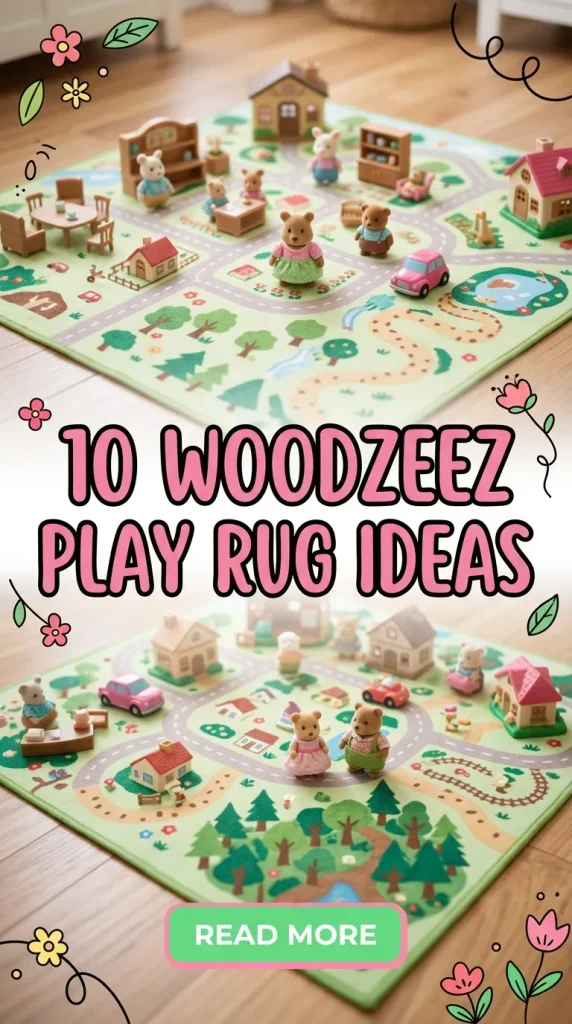
Creative Playrooms: Exploring 10 Woodzeez Play Rug Ideas
Designing a dedicated interactive playspace for children requires thoughtful spatial planning, tactile comfort, and themes that spark open-ended storytelling. This comprehensive guide details ten versatile Woodzeez play rug ideas that seamlessly combine protective, high-density flooring with charming miniature world layouts. Readers will learn how to select durable, non-toxic textiles, manage clear spatial boundary zones, integrate organic toy storage setups, and maintain an immaculate playroom environment. Whether you are transforming a small bedroom alcove or updating a shared family living space, this structured tutorial offers clear, actionable steps to elevate your setup. Understanding how to manage rug scale and select appropriate thematic graphics allows you to establish an inviting, creative sanctuary while keeping your home decor clean and organized. By focusing on balanced geometry, durable fabrics, and smart organization methods, anyone can confidently execute a rewarding and highly engaging child-focused home project.
Why Thematic Miniature Landscapes Are Trending
Streamlined yet highly imaginative children’s flooring solutions have captured massive visibility across modern Pinterest ideas, demonstrating a prominent shift toward purposeful interior layout design. These trending ideas are exceptionally popular because they offer significant practical value, defining a clear, designated play boundary that keeps miniature figures and toy houses from scattering across high-traffic walking zones. The distinct focus on organic landscape graphics and custom modular pathways carries an incredible DIY appeal, enabling individuals to construct beautifully integrated activity zones with zero advanced building knowledge. This remarkable accessibility for beginners ensures that achieving a playful, upscale atmosphere does not require custom construction or expensive permanent architectural overhauls. By emphasizing tight-weave low-pile fabrics and non-slip backing, these creative ideas prove that a functional children’s play mat can serve as an intensely durable utility while exuding a sophisticated, calming aesthetic.
Essential Materials and Playroom Area Preparation
Launching a successful playroom decoration project requires thorough preparation, accurate floor surface measurements, and gathering appropriate assembly tools before unrolling your new textiles. Collect your essential installation equipment, including a standard measuring tape, heavy-duty fabric shears, premium non-slip rug pads, double-sided floor tape, and fabric protectant sprays. The primary materials needed for a durable, clean setup typically include low-pile woven nylon rugs, natural printed cotton canvas mats, interlocking EVA foam puzzle borders, lidded storage baskets, and low-profile wooden toy storage bins. During the initial preparation phase, clear away unnecessary floor clutter, vacuum the existing subfloor thoroughly to remove hidden dust, and check that your layout leaves adequate clearance for doors to swing open smoothly. Developing a precise layout blueprint beforehand ensures your creative project proceeds smoothly from start to finish, preventing sliding hazards and ensuring your play furniture remains entirely stable.
Ten Practical Play Rug Concepts for Miniature Worlds
Idea 1: The Rolling Country Hills Low-Pile Mat
Setup Method
To establish a continuous, sprawling countryside backdrop that matches the rustic theme of woodland toy figurines, select a large, tight-weave low-pile nylon rug decorated with soft green meadow graphics. Ensure the rug features an integrated, heavy-duty rubber non-slip backing layer to prevent the fabric from bunching up as children crawl across the surface. Position the large rectangular mat directly in the center of the playroom floor, using double-sided floor tape along the corners for absolute stability. Arrange your miniature woodland cottage models and treehouses along the printed green hill crests to create a multi-dimensional play horizon. This easy project provides a soft, comfortable baseline that can be vacuumed daily without catching or fraying the delicate fibers.

Idea 2: The Interlocking Forest Trail EVA Grid
Step-by-Step Guide
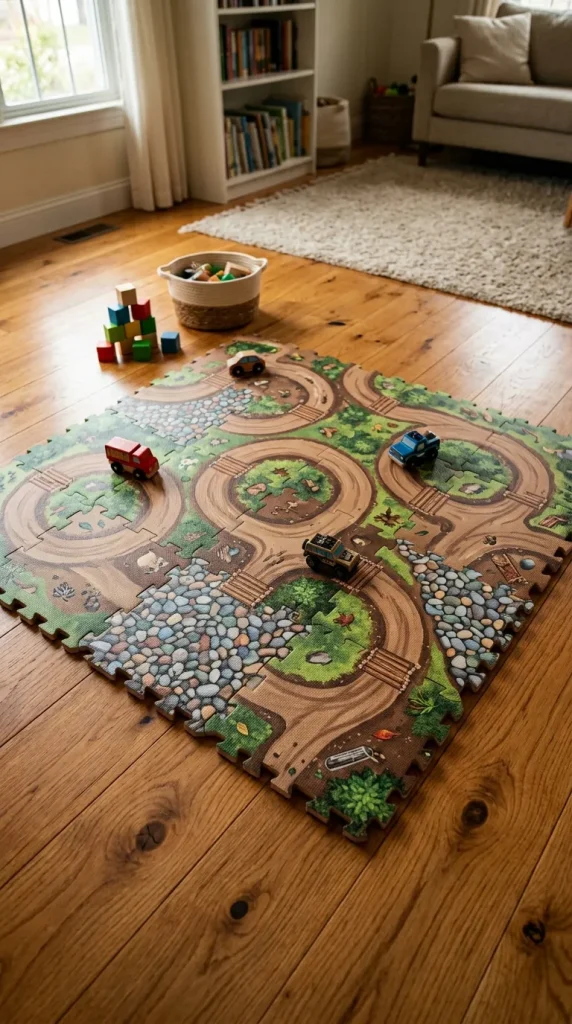
Introduce an adjustable, high-capacity impact cushion to a hardwood floor by assembling a modular grid system using thick EVA foam puzzle tiles printed with woodland pathways. Lay out sixteen interlocking twelve-by-twelve-inch foam tiles in a strict four-by-four square configuration, snapping the puzzle teeth together firmly using light hand pressure. Select tiles featuring detailed high-definition graphics of winding dirt tracks, small log bridges, and patchworks of river pebbles. Frame the completed foam matrix with flat edge border strips to create a smooth, clean transition line down to your main floor surface. This waterproof setup protects your underlying floor substrate from accidental scratches caused by plastic toy edges while offering an ultra-soft, insulating kneeling space for extended play periods.
Idea 3: The Concentric Village Green Circular Weave
Execution Process
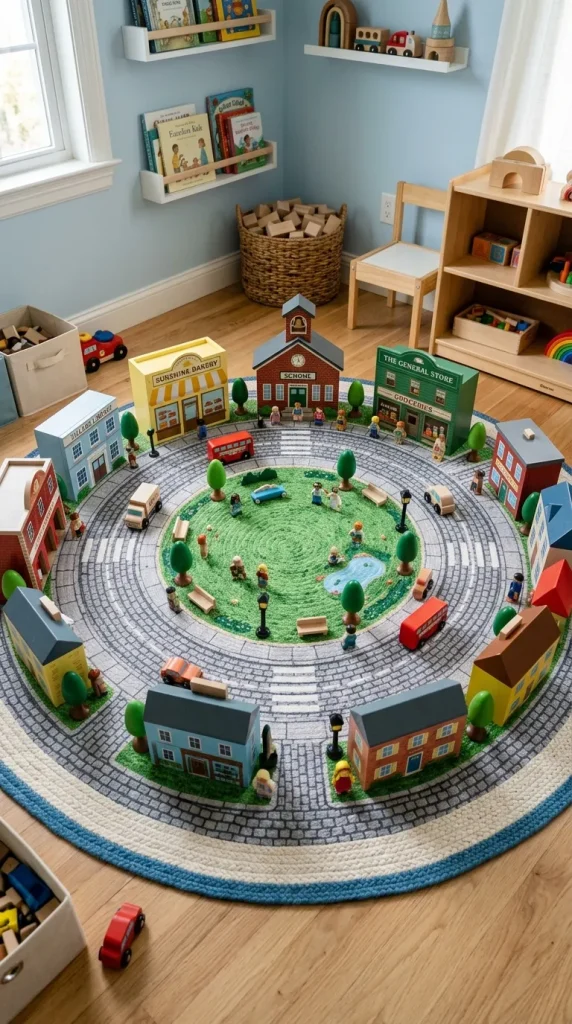
Incorporate a highly focused, communal town center layout into a square room corner by utilizing a large circular braided or woven cotton play rug. Choose a diameter of five feet featuring a central printed grassy park circle surrounded by concentric rings of gray cobblestone streets and tiny storefront plots. Position your miniature bakery, general store, and schoolhouse toys directly along the outer printed street rings, leaving the central green open for community gathering scenarios. The rounded geometric silhouette softens the rigid lines of standard room architecture beautifully, creating a self-contained miniature village zone. This design choice brings a premium, organized look to your home decor, keeping small toy accessories contained strictly within a defined circular boundary.
Idea 4: The Minimalist Streamlined River Valley Canvas
How to Create
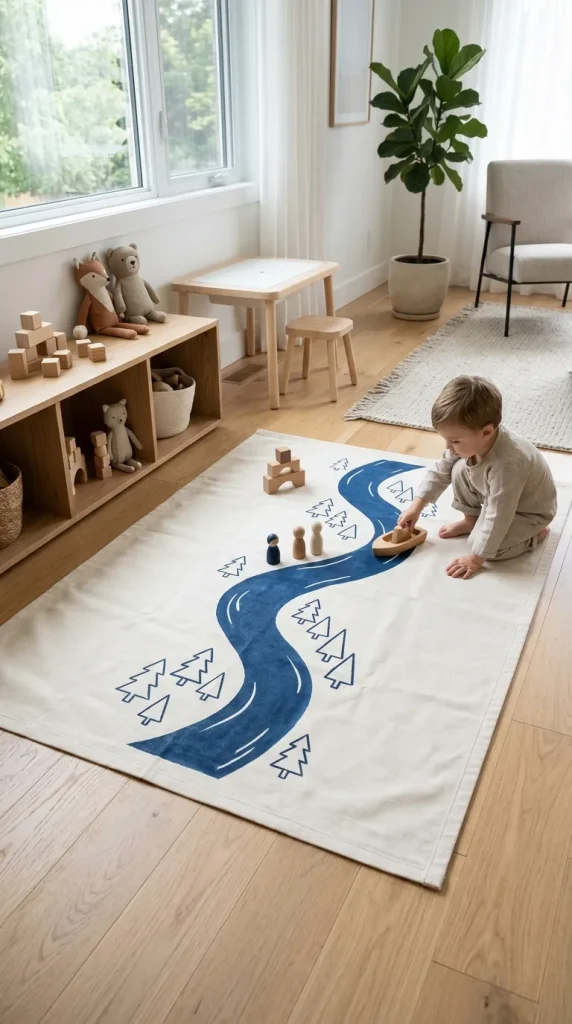
Break up the heavy appearance of colorful, chaotic children’s toys by rolling out a neutral, minimalist style printed cotton canvas drop-cloth mat. Cut a five-by-seven-foot piece of heavy-duty unbleached cotton duck canvas, sewing a clean half-inch hem around the perimeter to prevent any future fraying. Use non-toxic fabric paints to stencil a single, fluid winding blue river path down the center axis, adding simple graphic outlines of evergreen trees along the banks. Secure a thick felt rug pad underneath the canvas sheet to provide essential cushioning and prevent the lightweight fabric from sliding across smooth wood floors. This beginner friendly method coordinates flawlessly with high-end contemporary home decor while offering an open-ended landscape that sparks imaginative storytelling.
Idea 5: The Multi-Zone Coastal Bay and Harbor Map
How to Make
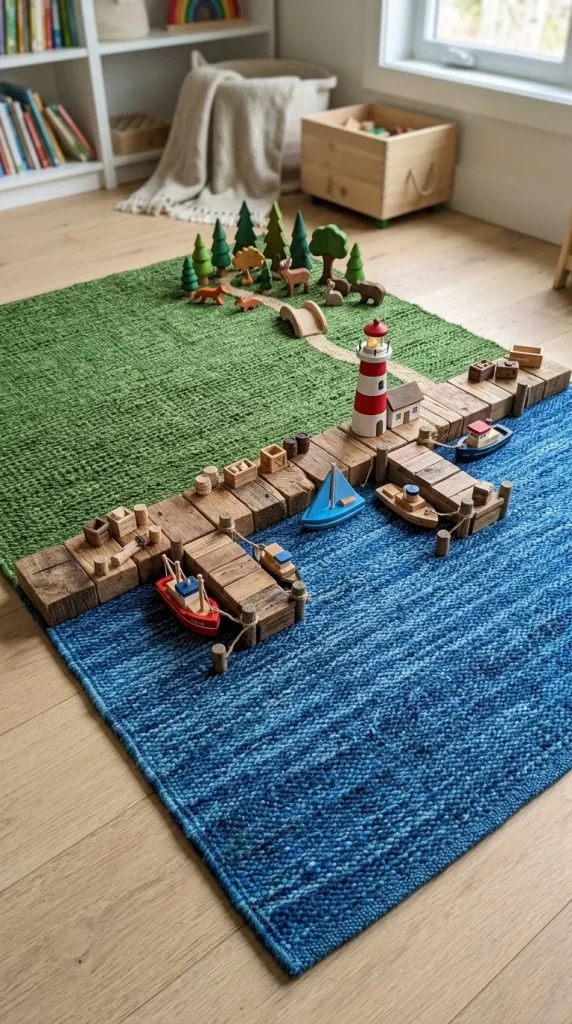
Create incredible narrative contrast across your playspace by selecting a dual-texture woven rug that splits the layout evenly between green turf grass and deep blue ocean graphics. Position the seaside portion of the rug design facing your indoor seating area, allowing children to dock miniature toy boats along the printed shoreline graphics. Place small, handmade wooden dock bumpers or blocks along the fabric transition line to simulate a realistic harbor front utility space. This structured arrangement allows children to separate their water-based toy vehicles from forest-dwelling animal figurines systematically. The high-contrast color blocks provide exceptional graphic quality to the room, anchoring large toy castles and lighthouses into a cohesive modern design theme.
Idea 6: The Recessed Multi-Level Activity Table Inset
Step-by-Step Guide
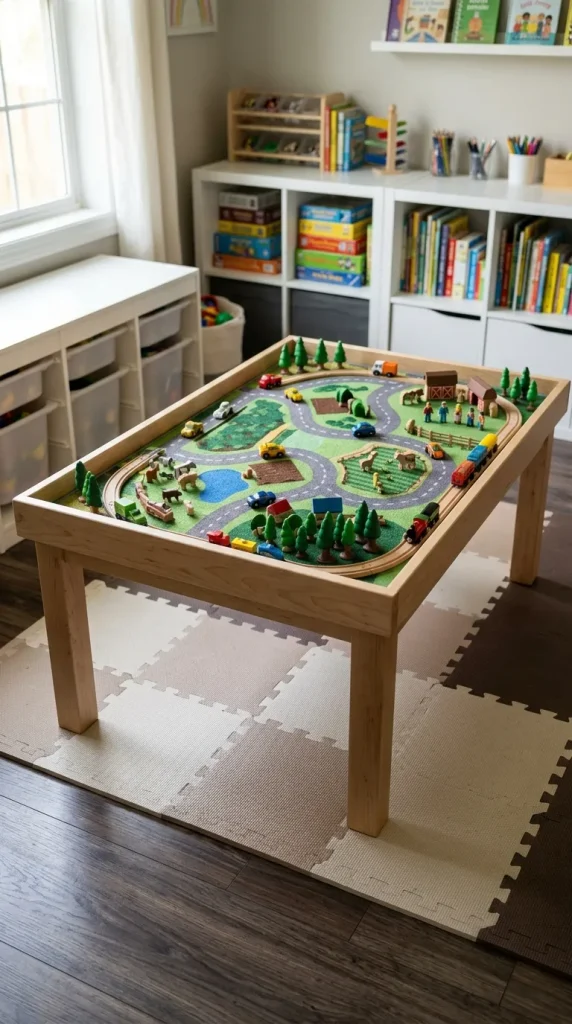
Introduce a highly structured, permanent play station to a dedicated playroom by custom-fitting a low-pile landscape rug directly into the top recess of a wooden activity table. Measure the inner dimensions of your play table tray precisely, cutting a durable felt-backed landscape rug to fit the exact flat surface footprint using heavy-duty shears. Secure the fabric insert flat inside the wooden rim using a non-permanent spray adhesive, ensuring all edges lie completely flush against the perimeter borders. This configuration brings your miniature world up to a comfortable standing height for children, protecting their backs while keeping small toys from falling off onto the floor. The raised wooden lips of the table framework provide a perfect structural barrier, maintaining absolute organizational neatness throughout the day.
Idea 7: The Seamless Monochrome Grid Cityscape
Setup Method
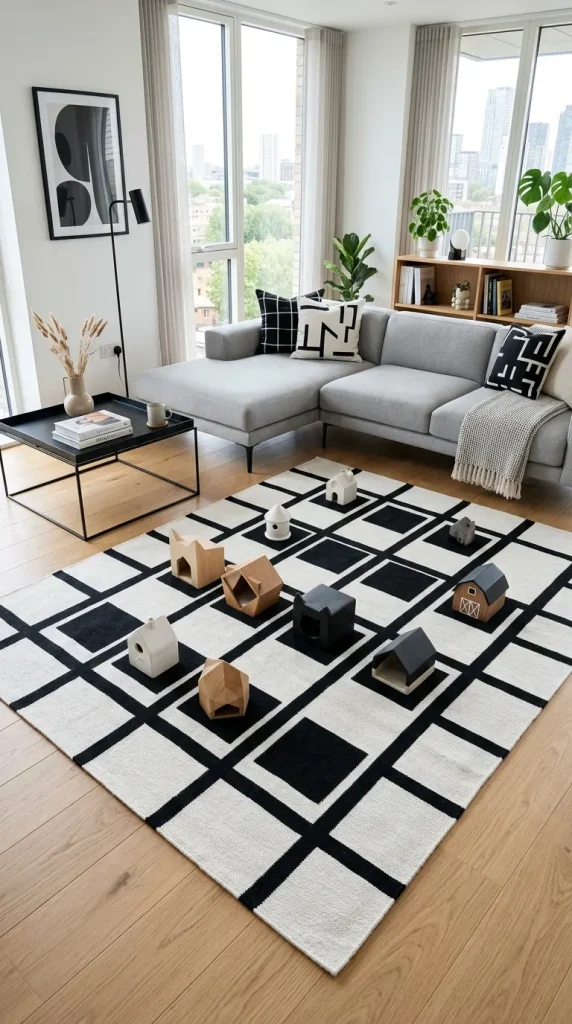
Achieve an ultra-clean, modern design aesthetic within a shared family living room by choosing a high-contrast black and white graphic grid play rug. The design features a minimalist style pattern of intersecting clean lines that mimic an organized urban street matrix without bright, distracting colors. Place your stylized miniature animal houses within the designated square grid blocks, turning the monochrome lines into functional streets for toy cars. This graphic decoration piece blends seamlessly into contemporary adult spaces, providing a dedicated play zone without disrupting your sophisticated interior design theme. The durable, tightly woven fibers hold up perfectly to intense foot traffic while keeping your home looking pristine and curated.
Idea 8: The Hidden Drawstring Storage Canvas Bag Rug
Execution Process
Eliminate evening toy cleanup chaos completely by implementing a dual-purpose circular canvas play mat equipped with an integrated outer drawstring cord system. Unroll the large, heavy-weight cotton canvas mat flat on the floor during playtime, allowing children to build their miniature woodland camps directly on the printed forest floor graphics. When play hours conclude, simply pull the exposed heavy-duty nylon cords along the perimeter rim to gather the outer edges of the fabric upward instantly. The rug transforms smoothly into a large, self-contained storage sack that holds all miniature animal figurines and small plastic accessories securely inside. Tuck the packed bundle neatly away inside a matching lidded wicker storage basket to preserve an immaculate home decor profile.

Idea 9: The Woodland Moss Textured Tufted Landscape
How to Create
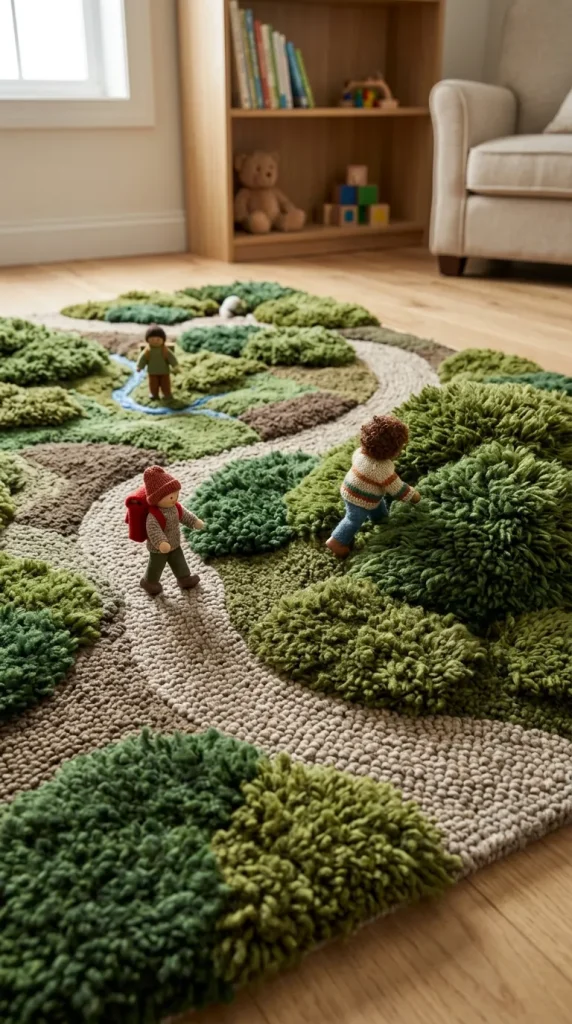
Introduce deep sensory tactile interaction to your child’s playroom by utilizing a high-end, custom-tufted wool rug featuring varied pile heights that simulate real nature textures. Select a rug that incorporates low, flat woven loops to represent smooth walking paths alongside dense, high-pile plush tufts that look and feel like soft green forest moss. Children will enjoy navigating their tiny toy characters across the shifting structural topography, experiencing distinct physical feedback during play. Position this luxurious statement piece prominently in a reading nook or bedside area to serve as an inviting, cozy relaxation pad. The rich material textures add incredible depth and handmade decoration quality to the space, balancing hard plastic toys with organic warmth.
Idea 10: The Hexagonal Honeycomb Modular Pathway Tiles
Setup Method
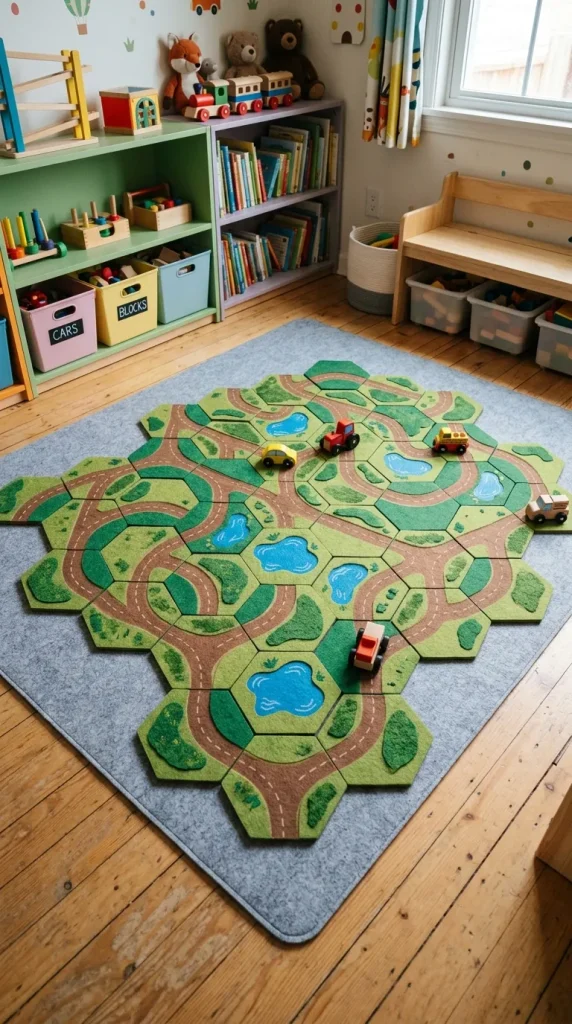
Introduce a playful geometric pattern to a compact playroom layout by utilizing a series of independent hexagonal rug tiles that can be rearranged like puzzle pieces. Choose six matching low-pile terrazzo or felt hexagonal mats printed with connecting segments of dirt roads, grassy patches, and small blue ponds. Arrange the individual hexagonal tiles side by side in a tight honeycomb configuration on a large non-slip master pad, changing the orientation to build new landscape shapes weekly. This highly customizable easy project keeps the play environment fresh and engaging for children without requiring you to purchase new accessories. The clean, contemporary geometry updates your floor plan effortlessly, providing a structured yet flexible workspace for creative project development.
Common Beginner Mistakes and How to Avoid Them
When executing new playroom design concepts, beginners frequently select standard high-pile shag rugs or loose-weave textiles for children’s activity zones. Shag carpets and deep plush fabrics create an unstable foundation for small, lightweight plastic toy houses and top-heavy figurines, causing them to tip over constantly during play. Furthermore, tiny toy accessories, plastic tools, and small animal characters easily sink down into deep fibers, becoming lost or creating painful tripping hazards underfoot. To easily avoid this serious frustration, always prioritize low-pile, tightly woven industrial-grade rugs or flat-woven canvas mats that provide a completely rigid, level surface for standing structures. Another frequent error is ignoring the underside of the carpet, leading to dangerous sliding issues on polished hardwood or smooth laminate tiles. Always install a thick, rubberized non-slip rug pad beneath every play textile to guarantee absolute stability and safety during active movement.
Styling, Presentation, and Long-Term Organization Systems
Maintaining a visually pristine playroom environment over time relies entirely on implementing highly structured, disciplined organization systems and clean presentation themes. Group smaller accessory items like tiny toy food, miniature clothing, and plastic furniture pieces inside matching lidded canvas storage boxes labeled with clear graphic icons. Position these labeled storage units neatly onto low-profile modular wooden shelving units placed along the border tracks of your play rug layout. Choose a unified accent color scheme consisting of two neutral base tones, adding vibrant organic life strictly through the printed landscape paths and your child’s toy collection. Keep your fabric sanitizing sprays and small cordless hand vacuums hidden away inside a matching decorative basket tucked beneath a nearby bench. These disciplined styling choices ensure your play areas remain entirely functional, clean, and beautifully aligned with your broader home decor goals.
Creative Expansion and Advanced Inspiration
Once your primary play rug configurations function perfectly, you can explore advanced technological and design integrations to further enhance your child’s interactive lifestyle. Consider installing low-profile smart automated LED strip lights beneath your low-profile wooden toy shelving units to cast soft ambient illumination downward across the printed rug pathways during evening hours. You can integrate subtle acoustic wall panels along the perimeter play boundaries to dampen loud echoes and sound transmission, maintaining a quieter household environment during high-energy games. Upgrading a simple corner layout with a custom-built low-profile wooden play table equipped with interchangeable magnetic landscape mats adds a luxurious, dynamic layer to your home decor. As your child’s developmental needs change over time, the modular nature of your interlocking foam tiles and drawstring mats allows you to transition the room layout effortlessly, providing endless opportunities for ongoing design inspiration.

