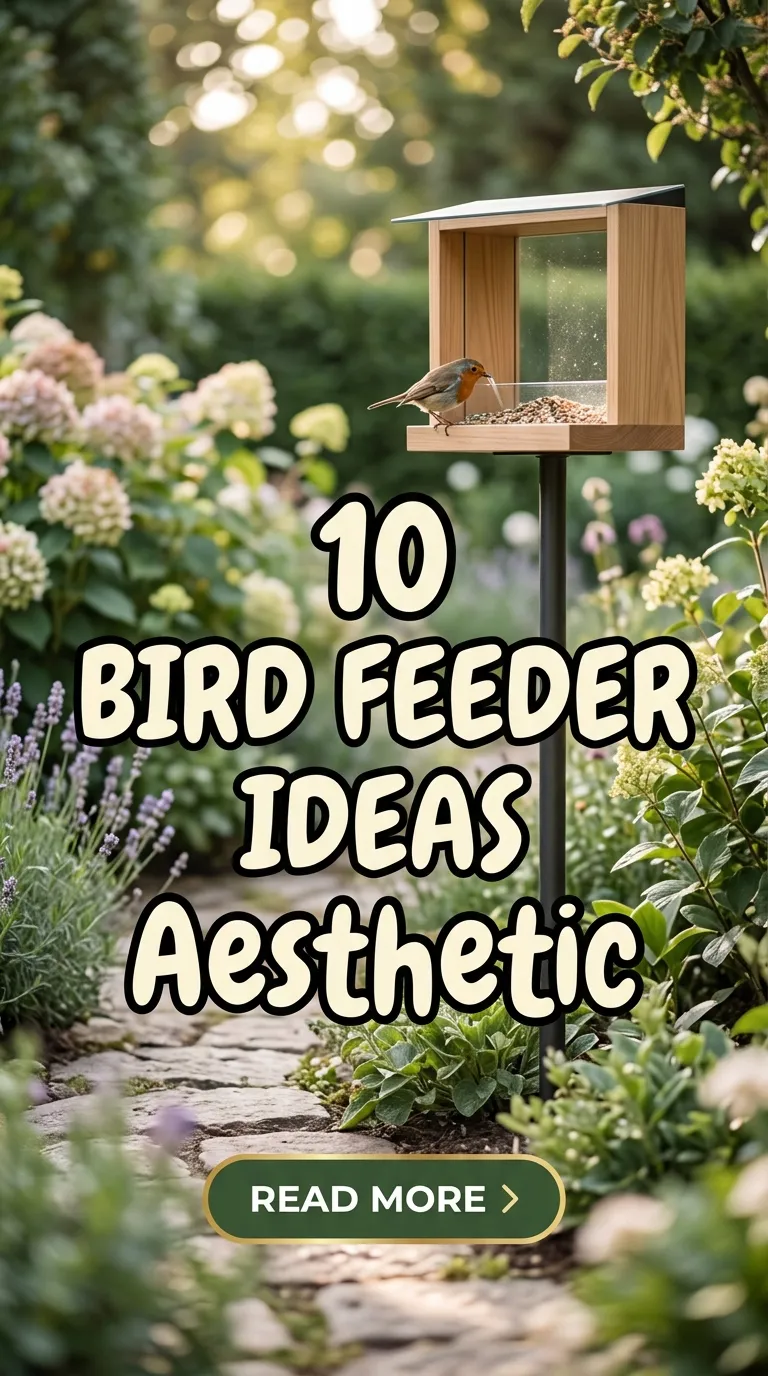
10 Bird Feeder Ideas Aesthetic
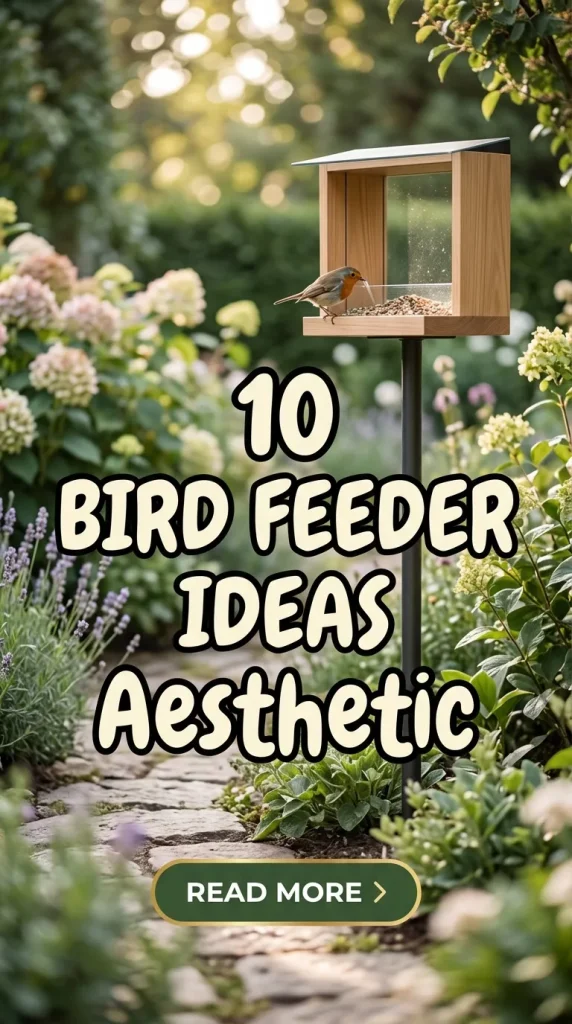
Backyard Sanctuary Design: Exploring 10 Aesthetic Bird Feeder Ideas
Creating a beautifully designed wildlife habitat in your backyard requires careful planning, spatial coordination, and a strong eye for clean structural integration. This comprehensive guide details ten versatile and aesthetic bird feader ideas that seamlessly bridge high-end home decor with essential ecological utility. Readers will discover how to source durable raw elements, optimize structural feeding geometry, manage spatial placement heights, and maintain an immaculate outdoor environment over time. Whether you are seeking to refresh a compact urban balcony or update an extensive country garden path, this structured tutorial offers clear, actionable steps to elevate your yard layout. Understanding the basic principles of avian ergonomics allows you to attract a diverse array of colorful songbirds while creating an elegant visual statement across your property. By focusing on balanced geometry, weather-resistant structural components, and clean presentation methods, anyone can confidently execute a rewarding and highly attractive backyard project.
Why Minimalist Wildlife Accents Are Trending
Streamlined, organic garden accents have captured massive attention across modern Pinterest ideas, demonstrating a prominent shift toward eco-friendly home integration. These trending ideas are exceptionally popular because they offer significant practical value, allowing homeowners to observe local bird species closely while keeping landscape profiles look clean and clutter-free. The distinct focus on structural geometric shapes carries an incredible DIY appeal, enabling individuals to convert basic geometric items into striking backyard features with zero advanced construction knowledge. This remarkable accessibility for beginners ensures that achieving an upscale, natural atmosphere does not require complex masonry or professional landscaping networks. By emphasizing integrated drainage systems and high-quality clear finishes, these modern design concepts prove that a wildlife feeder can serve as a highly functional, utilitarian asset while exuding a sophisticated, calming minimalist style.
Essential Materials and Outdoor Preparation
Launching a successful outdoor decoration project requires thorough preparation, accurate height planning, and the early acquisition of appropriate tools and durable materials. Before hanging any structures, gather your necessary assembly tools including an electric drill, stainless steel eye hooks, heavy-duty wire cutters, an outdoor level, and specialized weatherproof wood sealants. The primary materials needed for a durable, clean setup typically include thick borosilicate glass tubes, rust-resistant copper piping, copper wire cords, raw cedar planks, and weather-sealed ceramic saucer molds. During the initial preparation phase, clear out dead tree limbs, clear away low brush zones to protect birds from ground predators, and identify optimal views from your main indoor windows. Creating a precise layout blueprint ensures your creative project maintains proper landscape alignment, preventing premature weathering and ensuring your feeders are mounted securely against strong regional winds.
Ten Practical Feeder Concepts for Your Garden
Idea 1: The Monochromatic Architectural Copper Hopper
Setup Method
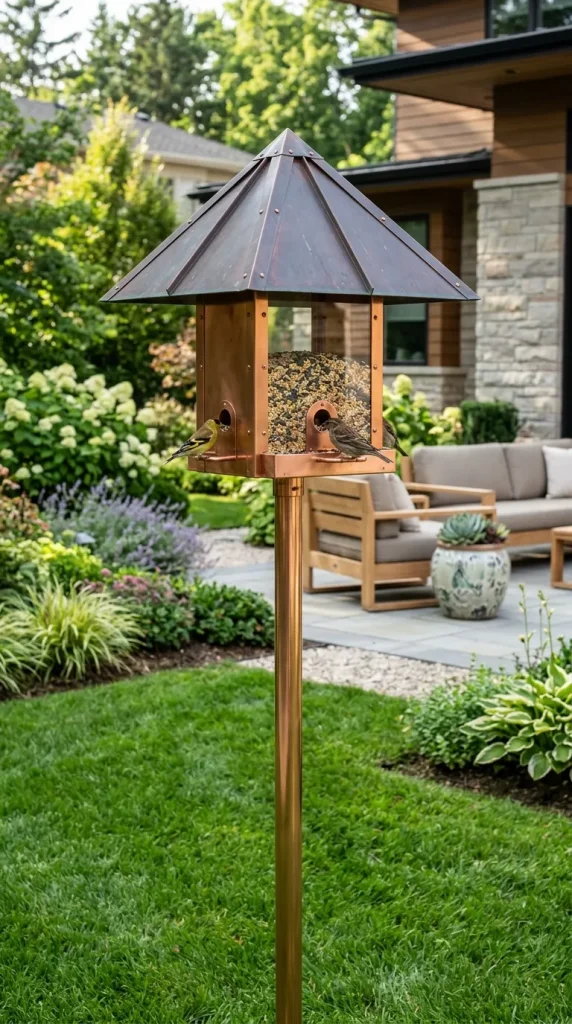
To establish a striking geometric silhouette against your green foliage, construct a clean rectangular hopper using heavy-gauge copper sheets and a solid clear acrylic feeding reservoir. Assemble the central storage cube by mounting the thick acrylic panels into slotted copper corner tracks, allowing the interior seed levels to remain perfectly visible from afar. Fasten a wide, overhanging copper pyramid roof to the top frame using weather-resistant copper rivets to shield the feeding ports from rainfall completely. Attach a matching copper tray to the base rim, drilling narrow two-millimeter drainage holes along the perimeter to prevent standing water buildup during heavy downpours. Mount the completed structure atop an elegant six-foot copper ground pipe positioned near a low garden shrub cluster to offer smaller birds immediate protective cover.
Idea 2: The Continuous Floating Ceramic Saucer Disc
Step-by-Step Guide
Introduce a clean, Zen-like atmosphere to a minimalist style patio area by hanging an elegant tiered saucer feeder made entirely from unglazed matte ceramic clay. Drill a single, centered quarter-inch hole through the exact middle points of two different-sized circular ceramic plant plates using a specialized diamond-tipped masonry bit. Thread a plastic-coated stainless steel aircraft cable through the plates, securing the lower, wider plate as the main seed basin and the upper plate as a protective sun canopy. Separate the two ceramic discs by inserting a clean three-inch hollow aluminum spacer tube directly over the vertical support wire to allow optimal avian landing space. Hang this sleek, handmade decoration fixture from a sturdy porch joist using an iron S-hook, keeping the alignment perfectly level to prevent seed spillage.

Idea 3: The Seamless Modern Clear Window View
Execution Process
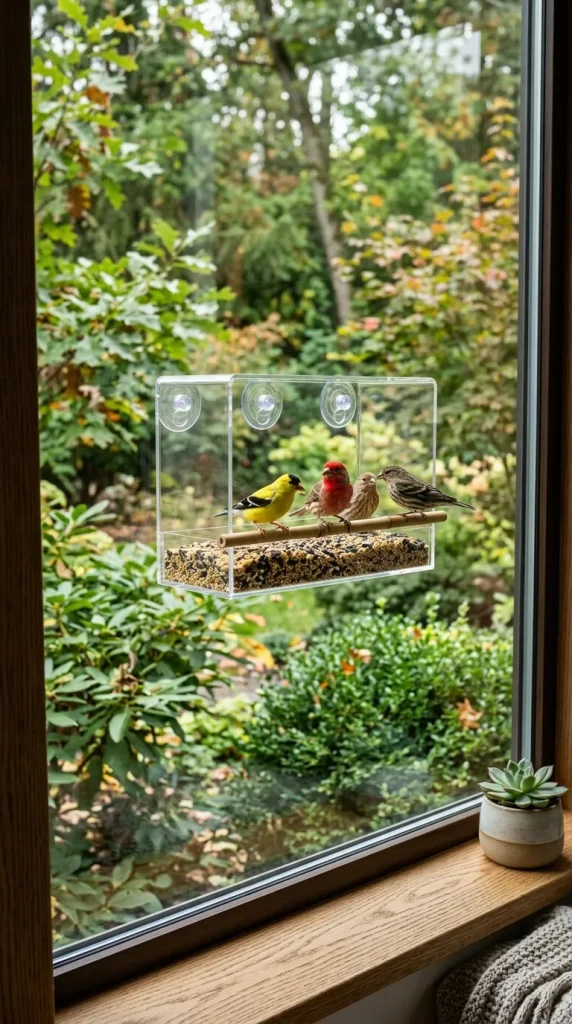
Conceal bulky, obstructive framing components entirely by mounting an ultra-clear, heavy-duty acrylic feeding box directly onto your clean exterior window panes. Secure three architectural-grade suction cups into pre-drilled rear holes on the transparent acrylic box body, ensuring the rubber pads are completely free from dirt and oil residue. Press the box firmly onto the center of your glass window at eye level, creating an intimate, high-definition viewing station that eliminates all viewing obstacles. Install a small, split-bamboo landing perch along the front entrance rim using outdoor-grade silicone adhesive to provide a comfortable textured grip for visiting finches and chickadees. This easy project brings natural movement directly into your indoor living spaces while utilizing a minimalist layout that preserves clean, modern home design lines.
Idea 4: The Streamlined Raw Cedar Slatted Trough
How to Create
Break up the heavy appearance of traditional plastic box feeders by constructing a low-profile, elongated horizontal feeding trough using sustainably sourced raw western red cedar planks. Cut a single three-foot-long cedar board to act as the main floor, attaching narrow two-inch side slats using exterior-grade wood screws and waterproof wood glue. Drill thin, horizontal rows of five-millimeter holes across the entire cedar base board, stretching a fine stainless steel mesh layer over the floor to maximize internal air circulation. Mount two low-profile triangular cedar brackets to the rear edge, allowing the trough to be fastened flush against an existing wooden garden fence line or porch railing. This beginner friendly concept allows several songbirds to feed simultaneously along a single line, maintaining an organized and beautiful landscape.
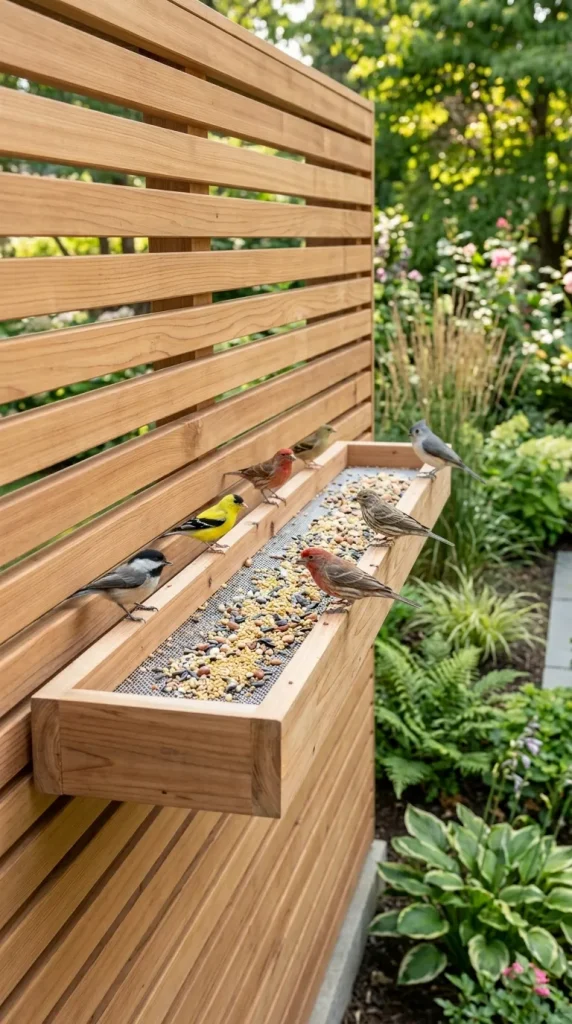
Idea 5: The High-Contrast Geometric Concrete Orb
How to Make
Create incredible modern contrast against soft backyard leaves by casting a perfectly spherical, hollow bird feeder using lightweight glass-fiber reinforced white concrete mix. Pour the wet concrete slurry into a double-layered spherical plastic mold assembly, utilizing an offset interior inflatable rubber ball to form a large, hollow center cavern. Carve out a wide, clean three-inch circular access opening on the front side of the sphere while the concrete remains partially soft and workable. Once fully cured, sand the exterior surface to a smooth finish, coating the interior cavity with a non-toxic, food-safe water-repellent sealer. Suspend the heavy concrete orb from an established oak tree branch using a thick black braided nylon rope, creating an eye-catching sculptural element that stays steady during intense windstorms.
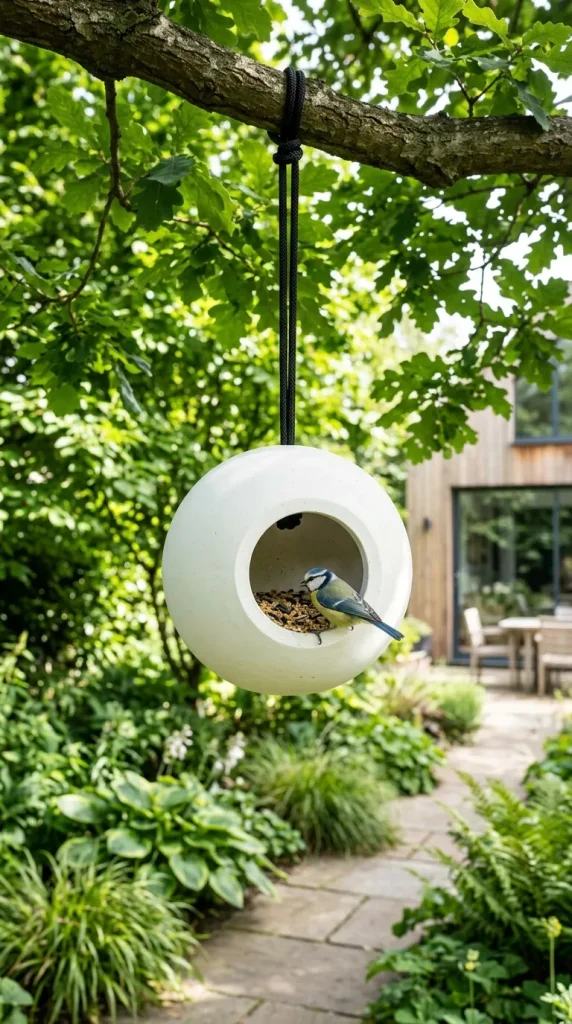
Idea 6: The Recessed Mason Jar Wire Cradle
Step-by-Step Guide
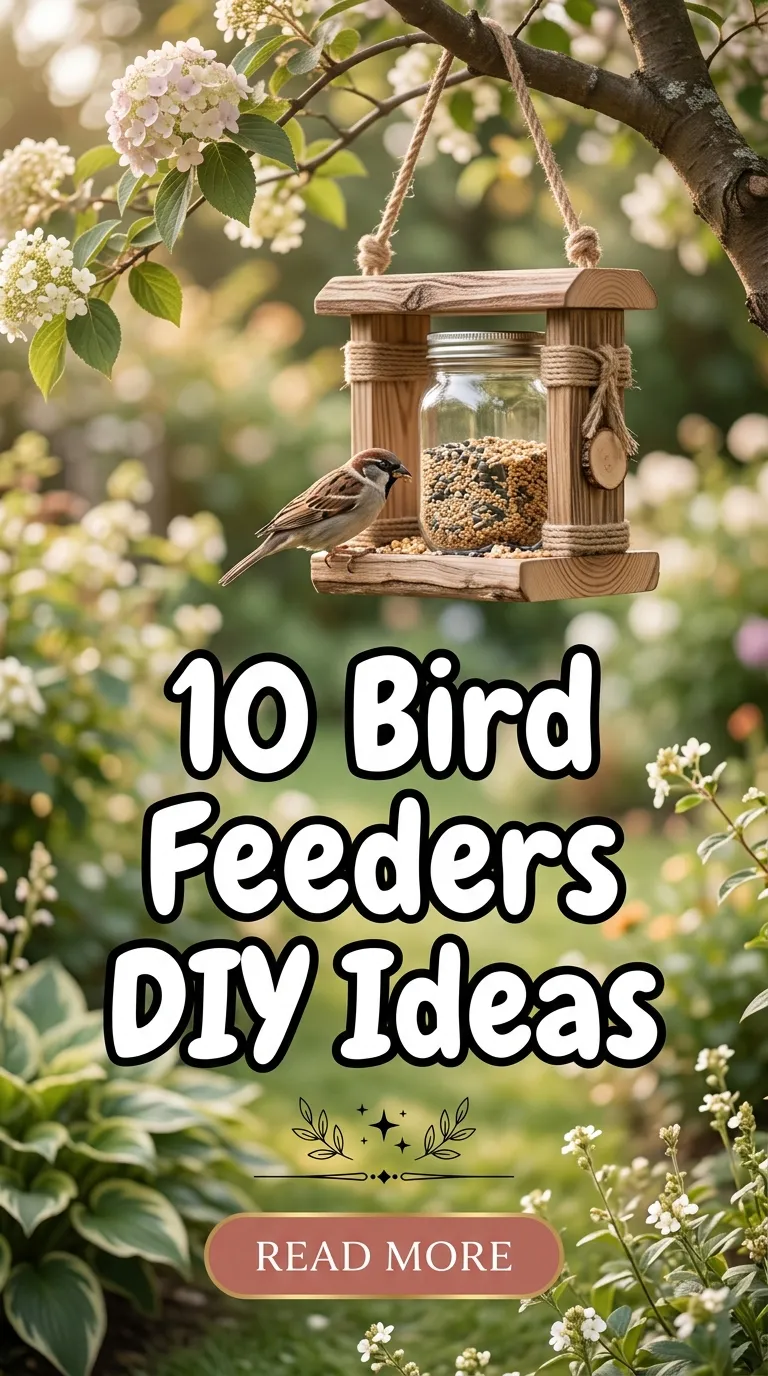
Incorporate classic handmade aesthetic style into your garden layout by suspending a heavy, clear glass mason jar horizontally within a minimalist wire suspension cradle. Wrap a single piece of thick, flexible twelve-gauge copper ground wire tightly around the glass bottle neck, extending the wire line along the cylinder body to form a secure structural harness. Bend the top end of the copper harness into a wide, integrated hanging loop positioned precisely above the jar’s natural center of gravity to prevent tipping. Invert a small, shallow circular metal seed tray over the glass mouth opening, leaving a narrow half-inch gap to allow seeds to flow outward gradually as birds consume them. This budget ideas solution utilizes recycled kitchen glass beautifully, protecting your feed inventory from moisture while offering a rustic visual accent.
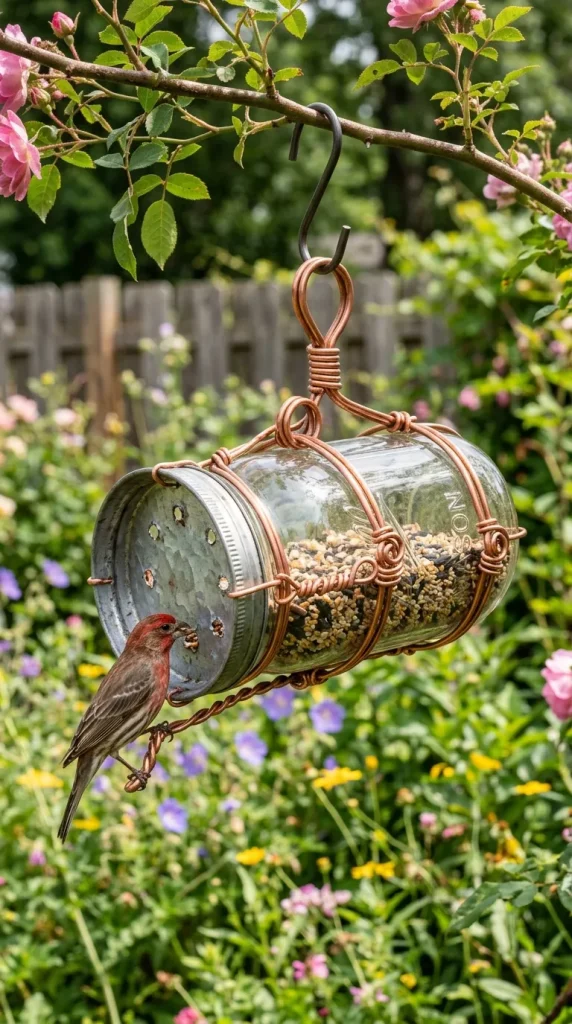
Idea 7: The Hidden Minimalist Branch Inset Pocket
Setup Method
Maintain an entirely natural, undisturbed woodland look across your property by carving a functional feeding channel directly into a fallen, weathered hardwood tree log. Select a dense oak or hickory branch measuring roughly four inches in diameter and two feet long, cleaning away any soft, rotted outer bark sections. Use a two-inch Forstner drill bit to bore a series of shallow, one-inch-deep pockets along the top horizontal plane of the natural wood log. Fill these integrated wooden pockets with high-energy suet cake mix, raw peanut halves, or high-quality black oil sunflower seeds for local woodpeckers and nuthatches. Suspend the prepared log horizontally between two sturdy tree trunks using hidden steel eye bolts and high-tensile steel cables, blending the feeding station seamlessly into the forest canopy.

Idea 8: The Matte Black Geometric Metal Lantern
Execution Process
Introduce a contemporary graphic quality to a bright garden path by systematically retrofitting a modern, open-frame matte black steel candle lantern into an efficient seed station. Remove the internal glass candle cups and heavy side panes completely, leaving the hollow, geometric metal framing lines fully exposed to allow maximum airflow. Mount a fine-mesh stainless steel seed tube down the exact center axis of the lantern frame, securing the mesh base to the bottom steel plate with machine screws. The open outer cage allows smaller birds to hop inside easily to feed while effectively blocking out larger, disruptive pest birds like crows and pigeons. This quick DIY inspiration project provides instant visual contrast against light-colored garden walls, delivering a sophisticated look without requiring extensive custom carpentry tools.
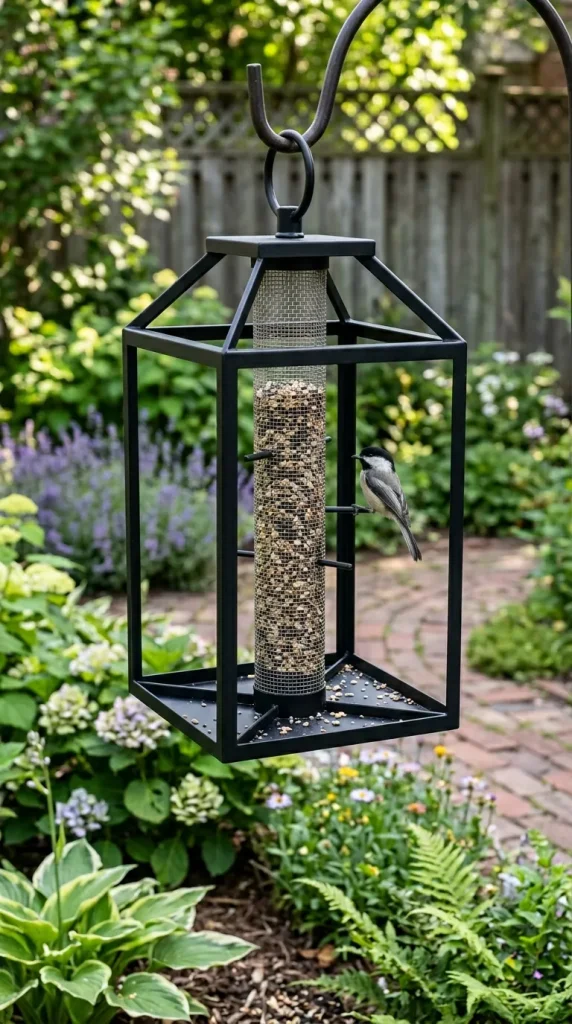
Idea 9: The Low-Profile Floating Glass Tube Cylinder
How to Create
Achieve a highly continuous, transparent vertical perspective across your patio by assembling a sleek feeding cylinder using a thick borosilicate glass sleeve and brushed steel caps. Drill two parallel half-inch holes through the lower sides of the glass tube, sliding a solid brushed stainless steel perch rod completely through the cylinder diameter. Attach a heavy, rubber-gasketed steel cap to the bottom opening to hold the seed column securely, adding a matching removable top cap for quick refilling. The glass cylinder layout blocks moisture intrusion entirely, keeping your specialized bird seeds dry and free from dangerous mold growth over long winter periods. This minimalist style choice creates an ultra-streamlined silhouette that matches high-end contemporary home decor while providing clear view lines of visiting wildlife.

Idea 10: The Deep Square Recessed Suet Block Grid
Setup Method
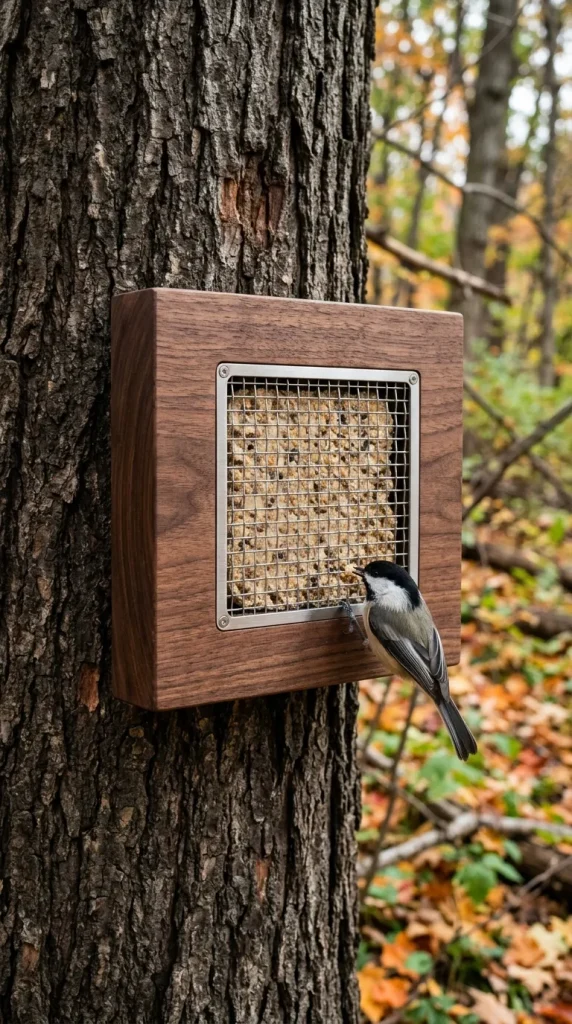
Eliminate ugly, rust-prone plastic-coated wire suet cages from your view by building a flush-mounted, geometric wooden suet block holder out of dark walnut timber. Cut a solid eight-by-eight-inch square block of walnut wood, using a router tool to carve a deep square recess into the absolute center of the front face. Press a standard high-energy suet cake firmly into the recessed cavity, securing it in place with a thin, flush-mounted stainless steel grid cover plate. Mount the completed dark wood block directly onto the main trunk of a mature maple tree at a total height of six feet using stainless steel deck screws. The rich wood grains and flush layout provide a clean architectural appearance that blends into the tree bark while allowing clinging birds to feed naturally.