10 Bird Feeder Station Ideas DIY Concrete

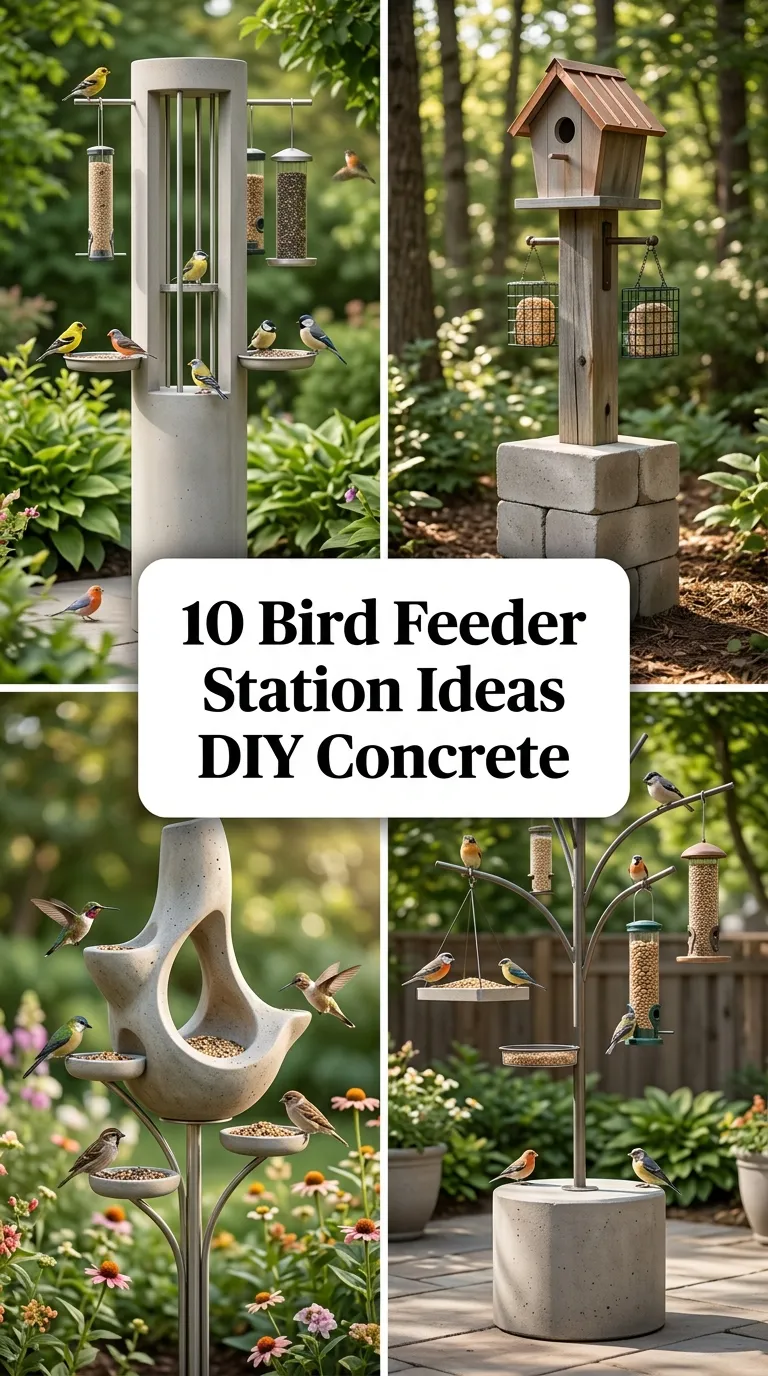
Bird Feeder Station Ideas DIY Concrete
Integrating handmade wildlife feeding platforms and concrete structural anchors into your backyard layout represents an exceptional strategy for supporting local avian populations while elevating your exterior home decor. On popular visual discovery networks like Pinterest, specialized outdoor masonry structures serve as critical design blueprints for transforming flat, open garden lawns into highly interactive environmental sanctuaries. Readers will learn how to select correct cement aggregates, build durable geometric forming molds, implement safe non-toxic structural treatments, and secure various feeding attachments onto concrete bases with precision. Understanding the weight properties and curing cycles of mixed concrete allows property owners to construct stable backyard installations that completely resist tipping during high seasonal windstorms or animal disruptions. This comprehensive tutorial delivers ten practical casting concepts that function as highly accessible outdoor projects, regardless of your background in manual carpentry or stone masonry. By prioritizing textured surfaces and geometric proportions, these creative ideas convert basic utility items into elegant landscape decorations that follow contemporary modern design principles.
The current movement in urban landscape architecture places massive value on low-maintenance, long-lasting garden accents that introduce visual texture and structure without requiring expensive professional remodeling. Custom-cast concrete bird feeding systems have emerged as prominent trending ideas because they resolve common backyard challenges, such as unsteady metal pole tipping, rotting wood posts, and constant damage from larger climbing pests, without sacrificing a clean, minimalist style. The practical value of constructing a heavy concrete station lies in its high durability, keeping the structural anchor firmly grounded in place for multiple years across changing seasonal freeze-and-thaw cycles. For beginners, executing a basic geometric mold casting project represents an exceptionally manageable DIY project that introduces a striking aesthetic statement with a low initial financial investment. This disciplined construction technique pairs direct environmental utility with essential physical longevity, providing excellent inspiration for creative home organization and future backyard planning. Implementing these structural frameworks allows individuals to personalize their immediate outdoor scenery while ensuring a polished presentation across the property lines.
Successful execution of an outdoor concrete casting project depends entirely on precise mold preparation and assembling correct mixing tools before opening any heavy bags of dry aggregate material. Required materials and tools generally include quick-setting commercial concrete mix, vegetable oil lubricants, rigid plastic forming buckets, galvanized anchor bolts, heavy-duty wire mesh reinforcements, bucket mixing paddles, safety goggles, and a rubber mallet. Planning considerations must strictly prioritize the physical safety of your local wildlife, meaning all internal feeding troughs and water basins must remain raw or treated exclusively with specialized food-safe sealers that resist chemical leaching. Mixing the dry cement with precise volumes of clean water ensures a smooth, workable consistency that maximizes structural strength upon curing completely. Thoroughly lubricating your internal mold walls with common vegetable oil, setting your structural steel supports at perfect right angles, and vibrating out air bubbles guarantees a flawless step by step tutorial execution that yields beautiful results.
1. Cylindrical Geometric Pedestal Stands
Step-by-Step Guide
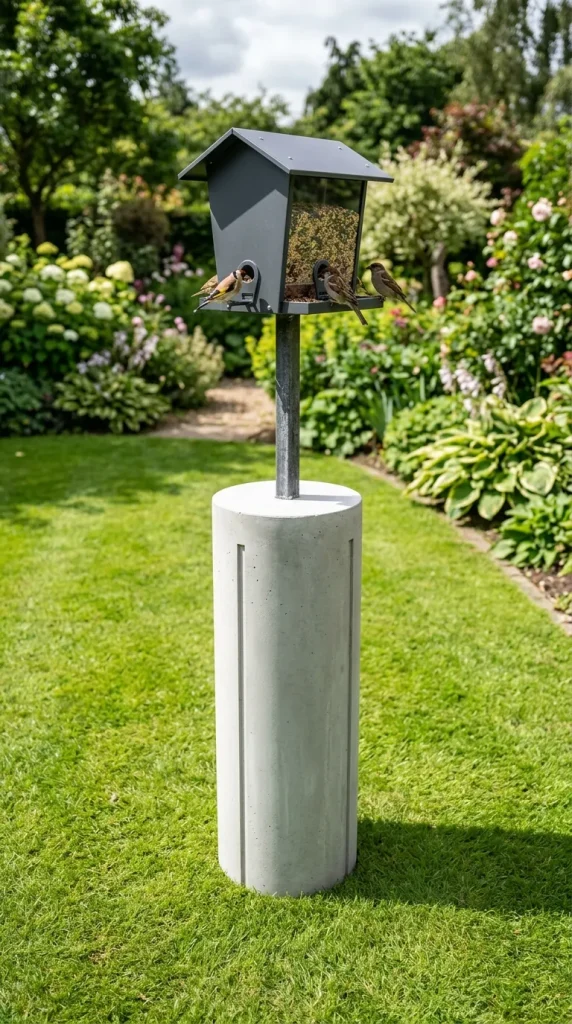
Configuring a cylindrical geometric pedestal stand relies on using an empty, reinforced construction sonotube or a tall plastic utility pipe to form a perfectly smooth vertical column base. To execute this creative project, cut a heavy-duty cardboard pouring tube to a vertical length of thirty-six inches, placing it upright inside a secure wooden box support frame to prevent shifting. Coat the entire inner wall of the tube with a generous layer of mineral oil lubricant, then insert a central half-inch galvanized steel utility pipe down the center line to serve as a strong internal mounting spine. Mix your concrete aggregate thoroughly until it reaches a thick paste texture, pouring the fluid slowly into the column cavity in sequential six-inch layers while tapping the outer walls with a rubber mallet to release trapped air pocket bubbles. Allow the structural masonry column to cure completely undisturbed for forty-eight hours before slicing away the outer cardboard casing with a sharp utility knife to reveal a beautiful minimalist style pedestal.
2. Fluted Architectural Block Towers
Setup Method
Traditional thin iron bird feeding poles often appear spindly, uncoordinated, and visually weak when installed across an open, modern design garden landscape. Resolve this structural scale limitation by casting a series of modular fluted concrete blocks using corrugated plastic roofing sheets as your primary internal mold liners. Line the interior walls of a square wooden forming crate with cut segments of wavy corrugated plastic sheets, ensuring the ridged flutes run vertically along the side faces. Pour your high-strength concrete mix directly into the structured framework, embedding a threaded steel coupler bolt precisely flush with the top center surface of the wet stone matrix. Once fully cured, unbolt the exterior wooden panels to reveal a striking, architectural concrete column block displaying deep fluted geometric details across all four sides. Stack these heavy blocks vertically to build a highly stable, high-end handmade base that elevates your favorite wood or acrylic birdseed hoppers beautifully.

3. Inlaid River Pebble Wading Bowls
Execution Process
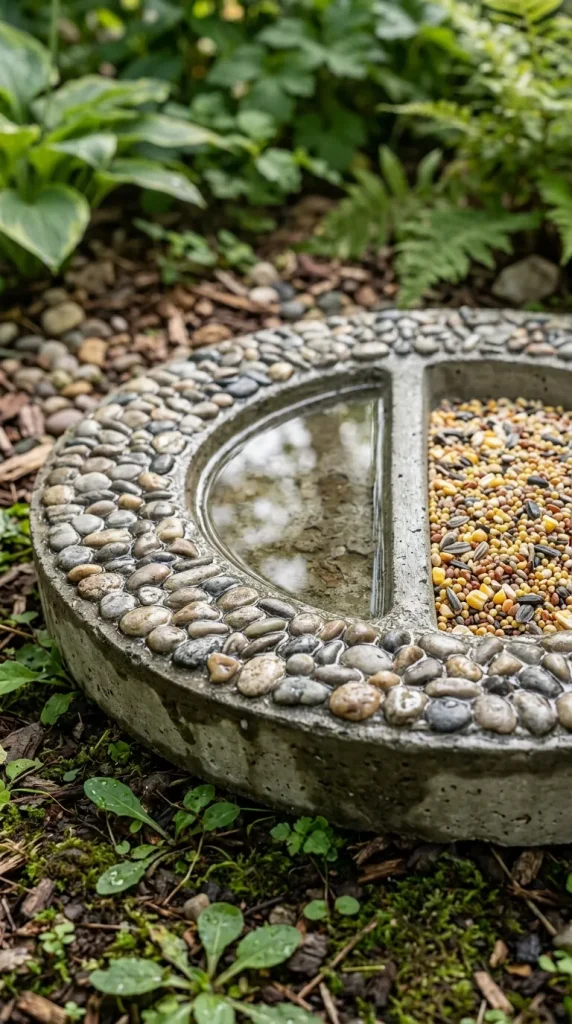
Creating an organic, shallow wading bowl directly inside a heavy concrete disc cap combines structural mass with natural stone textures to create a highly functional, multi-tiered bird feeding station. Construct a broad, low-profile circular mold box using a twenty-inch plastic saucer tray, pouring your mixed concrete aggregate until the layer reaches a uniform depth of three inches. Press a series of smooth, hand-selected natural river pebbles firmly into the wet surface along the outer rim, arranging the stones tightly side by side to establish a texturized landing perimeter ring. Press a smaller twelve-inch plastic bowl gently into the absolute center of the wet mix to form a shallow, one-inch-deep central water pooling basin. This multi-leveled handmade decoration serves as a brilliant visual centerpiece when mounted atop a thick timber post, offering visiting songbirds secure physical traction while drinking or bathing during warm afternoon hours.
4. Minimalist Cantilevered Square Cubes
How to Create
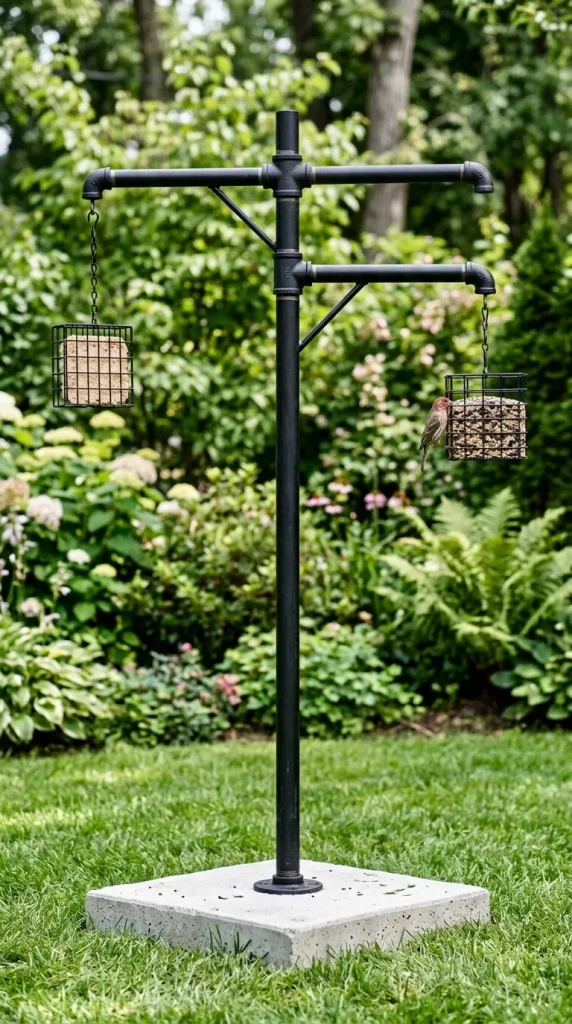
Incorporating sharp architectural angles into an exterior wildlife station relies on casting a heavy, subterranean concrete cube anchor that holds an asymmetric metal hook frame perfectly steady without shaking. Excavate a precise twelve-by-twelve-inch square hole directly into firm yard soil to a depth of fourteen inches, lining the subterranean earthen walls with thin scrap plywood sheets to establish clean geometric boundaries. Form a durable, square concrete block foundation directly inside the opening, embedding a thick, three-quarter-inch black industrial steel plumbing pipe vertically into the wet mix before it cures flat. Once the masonry sets firmly, attach a series of perpendicular black iron elbow joints and horizontal pipe arms to the exposed top spine, forming a sleek cantilevered structural frame for hanging seed cages. This clean aesthetic choice provides magnificent inspiration for high-end modern design, keeping the massive structural weight entirely hidden beneath your lawn grass line.
5. Stacked Slate Geometric Troughs
Setup Method
Building a multi-tiered concrete feeding station involves stacking rectangular stone tiles inside an elongated modular form box to construct an efficient multi-station aggregate layout. Assemble a long, narrow wooden trough form measuring eight inches wide by twenty-four inches long, securing the corner joints with heavy-duty exterior wood screws to withstand fluid expansion pressure. Place several flat segments of natural slate shingle stones along the bottom face of the form, pouring your concrete mix smoothly over the rocks to bond the elements into a single composite panel. Insert two vertical PVC sleeve tubes into the wet mix at opposite ends of the trough to establish permanent, built-in drainage weep holes that prevent rainwater accumulation from rotting birdseed later. This structured configuration organizes your backyard feeding zones cleanly, providing a beautiful minimalist style border asset that aligns perfectly with contemporary stone walls.

6. Pressed Leaf Botanical Basins
Step-by-Step Guide
Utilizing large, deeply veined natural foliage specimens as organic stamping tools allows you to cast a hyper-realistic botanical feeding tray that blends into garden greenery. Locate a massive, intact burdock or rhubarb leaf from your surrounding landscape, laying the plant structure face up atop a compacted mound of damp sand to shape a natural concave dome curve. Mix a fine-aggregate sand concrete blend to a highly workable consistency, troweling the wet mixture smoothly over the back of the leaf to a uniform thickness of two inches. Reinforce the structural integrity of the curved concrete shell by embedding a layer of flexible steel hardware cloth directly into the midsection of the wet matrix. After curing for three full days, peel the green biological leaf away carefully to expose a gorgeous concrete basin replicating every intricate vein pattern perfectly. Mount this organic handmade decoration onto a simple iron rod driven into the soil.

7. Tiered Stacked Planter Pedestals
How to Make
Managing a highly productive wildlife station alongside your favorite flowering flora involves casting a multi-functional, stacked pedestal system that incorporates built-in planter pockets around the central structural base. Construct two separate, concentric square concrete box frames using exterior plywood slats, ensuring the larger lower base mold measures eighteen inches wide while the upper module narrows to twelve inches. Pour high-strength concrete into both forms, embedding a central hollow PVC conduit line vertically through both components to allow for clean internal routing of structural support stakes. Once cured and stacked sequentially over a stable gravel footing, fill the open perimeter shelves with fertile potting soil to cultivate low-profile succulent arrangements or hanging ivy vines. This integrated layout strategy represents a fantastic beginner friendly creative project for comprehensive yard organization, combining natural vegetation displays with an incredibly heavy, un-tippable bird feeding anchor system.

8. Textured Coarse Sandstone Blocks
Execution Process
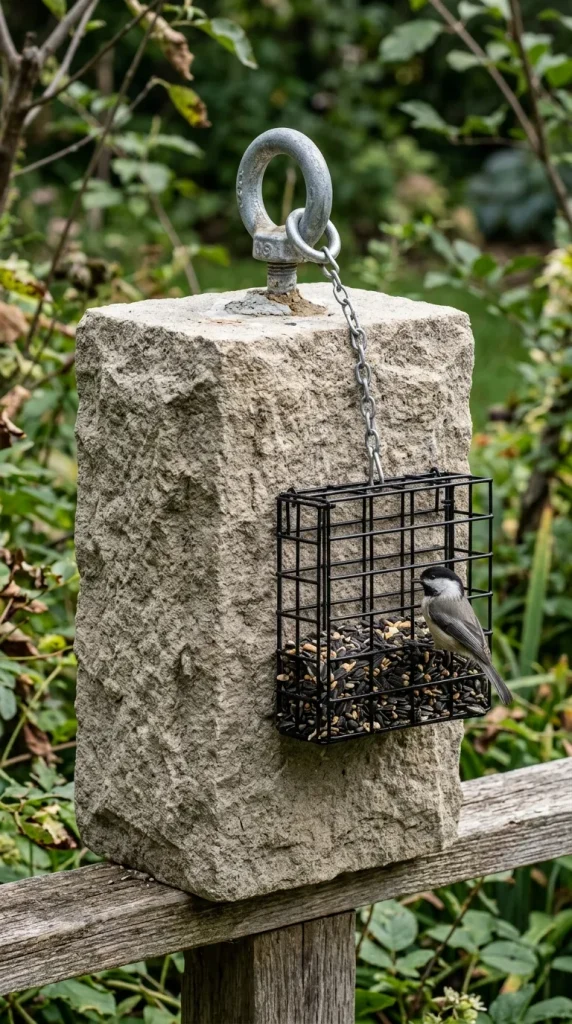
Replicating the rugged, texturized surface of natural split-face sandstone blocks involves coating your interior mold walls with coarse aggregate sand before pouring your liquid concrete mix. Spray the inner surfaces of a rectangular plastic storage bin thoroughly with a low-viscosity silicone release agent, dusting the wet walls with a heavy layer of raw masonry sand until a thick sand shell sticks to the plastic sides. Pour a standard gravel-and-cement mix directly into the sand-lined cavity, embedding a galvanized steel eye bolt firmly into the top center surface to function as a durable hanger anchor point. Once un-molded, use a stiff wire brush to scrub away loose surface particles, revealing a rugged, highly texturized sandstone finish that feels completely organic. This texturing technique provides exceptional design relevance for budget ideas, transforming affordable commercial concrete sacks into premium, high-end stonework look-alikes that complement modern patios beautifully.
9. Asymmetric Hexagonal Modern Hubs
Setup Method
Developing a highly sculptural contemporary bird destination relies on utilizing rigid insulation foam boards to cut custom hexagonal forming molds that produce bold geometric angles. Slice multiple segments of dense pink extrusion foam into matching sixty-degree angles using a hot-wire cutter or a sharp fine-tooth hand saw, taping the pieces together to assemble a large hexagonal frame. Pour a smooth self-leveling concrete mix into the custom geometric form, inserting three hollow copper connector sleeves angled outward from the bottom face of the wet stone block. Once cured, remove the foam boundaries and slide three solid oak wooden dowels firmly into the copper sleeves to serve as sleek, tripod-style mounting legs that elevate the hub above the grass. This asymmetric layout choice delivers excellent inspiration for forward-thinking home decor updates, combining mid-century geometric shapes with functional exterior durability.

10. Low-Profile Monolithic Lawn Slabs
How to Create
Constructing a heavy, ground-level monolithic concrete slab station provides a clean, zero-footprint wildlife zone that remains completely flush with your existing backyard turf lines. Frame out a wide four-by-four-foot square boundary directly inside an excavated sector of your lawn lawn, digging down exactly four inches deep to remove all organic grass root systems. Lay down a solid base layer of crushed decorative gravel tiles before pouring your high-strength concrete mix smoothly into the framed excavation pit, checking for absolute level alignment using a long aluminum straightedge. Embed a heavy-duty metal sleeve bracket flush into the center of the wet concrete slab to function as an interchangeable mounting socket for large wooden birdhouses or metal multi-hook branches. This permanent installation completely eliminates the need for unsightly surface stabilization brackets, providing a highly organized modern design anchor.

Common Beginner Mistakes and How to Avoid Them
A primary mistake when executing DIY concrete bird feeder station projects is adding far too much water to the dry cement aggregate during the mixing phase to speed up the pouring process. Excessively soupy concrete mixes flow into molds easily, but the high fluid content dilutes the essential chemical binders, leading to brittle structures that crack, flake, and crumble under winter frost exposure. Always maintain a stiff, workable consistency resembling thick cake batter, utilizing a mechanical mixing paddle to distribute moisture uniformly across the dry materials. Another frequent error is forgetting to vibrate the liquid masonry thoroughly once it is placed inside your plastic or wooden forming molds. Trapped air bubbles will gather along the smooth interior walls of the mold, creating deep structural pits, weak honeycombed surface pockets, and un-polished edges upon drying. Vigorously tap the outer frames with a rubber mallet or use an orbital sander held flat against the forms to drive all bubbles upward.
Practical Tips for Better Results
Achieving a flawless, professional-grade finish with handmade concrete backyard projects relies heavily on implementing a slow, disciplined moisture-retention curing schedule after your initial pour. Never allow your freshly cast concrete molds to sit exposed under direct, hot summer sunlight, as rapid evaporation dries out the surface prematurely and destroys fifty percent of the stone’s potential structural strength. Cover your damp forms completely with a thick sheet of plastic sheeting or wet burlap cloth, misting the assembly thoroughly with fresh water twice a day for a full five-day cycle before attempting to un-mold the work. Additionally, when preparing complex geometric molds with intricate corners, always apply a thin, uniform barrier film of commercial silicone release spray or clean vegetable oil across every interior square inch. This simple lubrication step prevents the curing cement matrix from bonding mechanically to your wooden forms, ensuring your custom blocks pull away flawlessly without chipping.
Styling, Presentation, or Organization Ideas
Properly coordinating your custom-cast concrete feeding installations with modern design principles ensures your personal outdoor environment looks highly intentional, sophisticated, and visually balanced from every viewing angle. Choose surrounding garden accessories that share a single material family or color palette, such as pairing raw gray concrete pedestals with dark charcoal gray river stones or minimalist black iron layout hooks across the property. This structural uniformity prevents multi-tiered bird stations from looking cluttered or disorganized, turning basic wildlife utility assets into high-end aesthetic home decor statements that support your overall property design theme. When organizing multiple feeding nodes along an open garden path, employ the rule of thirds by mixing heavy stone pedestals with low-maintenance decorative items like potted green herbs or minimalist wood carvings. Keep the immediately surrounding ground area entirely clear of loose debris, utilizing clean cedar wood chips to frame the masonry bases beautifully.
Budget or Time Planning
Upgrading your virtual or physical real estate scenery with durable masonry infrastructure does not require hiring an expensive landscape architect contract or investing vast amounts of capital into professional tools. Simple modifications like casting single cylindrical sonotube pillars or assembling low-profile lawn slabs are highly effective budget ideas that utilize basic commercial concrete sacks and repurposed household plastic containers for molds. A standard single-block casting project typically requires less than two hours of active manual execution time from start to finish, including material measuring, structural reinforcement placement, and final surface troweling phases. Setting aside a short, organized session over a weekend allows you to complete your mold preparation on Saturday morning and finalize your structural concrete pour before evening hours conclude. Allocating a specific portion of your project budget toward premium galvanized anchor bolts and steel wire mesh ensures essential long-term physical stability.
Creative Expansion and Advanced Inspiration
Once your core concrete backyard stations are fully operational and mastered, you can elevate your landscape layouts by incorporating advanced texturing techniques like acid-staining or embedded mosaic glass detailing. Applying specialized reactive chemical stains directly onto the cured, clean concrete surfaces shifts the plain industrial gray color into rich, variegated earth tones like deep amber, rust brown, or weathered slate blue over a single afternoon. This advanced modification highlights the natural contours of your handmade work, turning functional daytime wildlife stations into striking architectural focal points that enhance your property values smoothly. Another progressive design concept involves coupling your heavy cast concrete pedestals with low-voltage solar lighting fixtures embedded directly into the upper masonry caps before the material cures. Exploring these unique dual-purpose modifications allows homeowners to craft a highly sophisticated, adaptive environment that perfectly balances everyday outdoor utility with forward-thinking minimalist design trends.