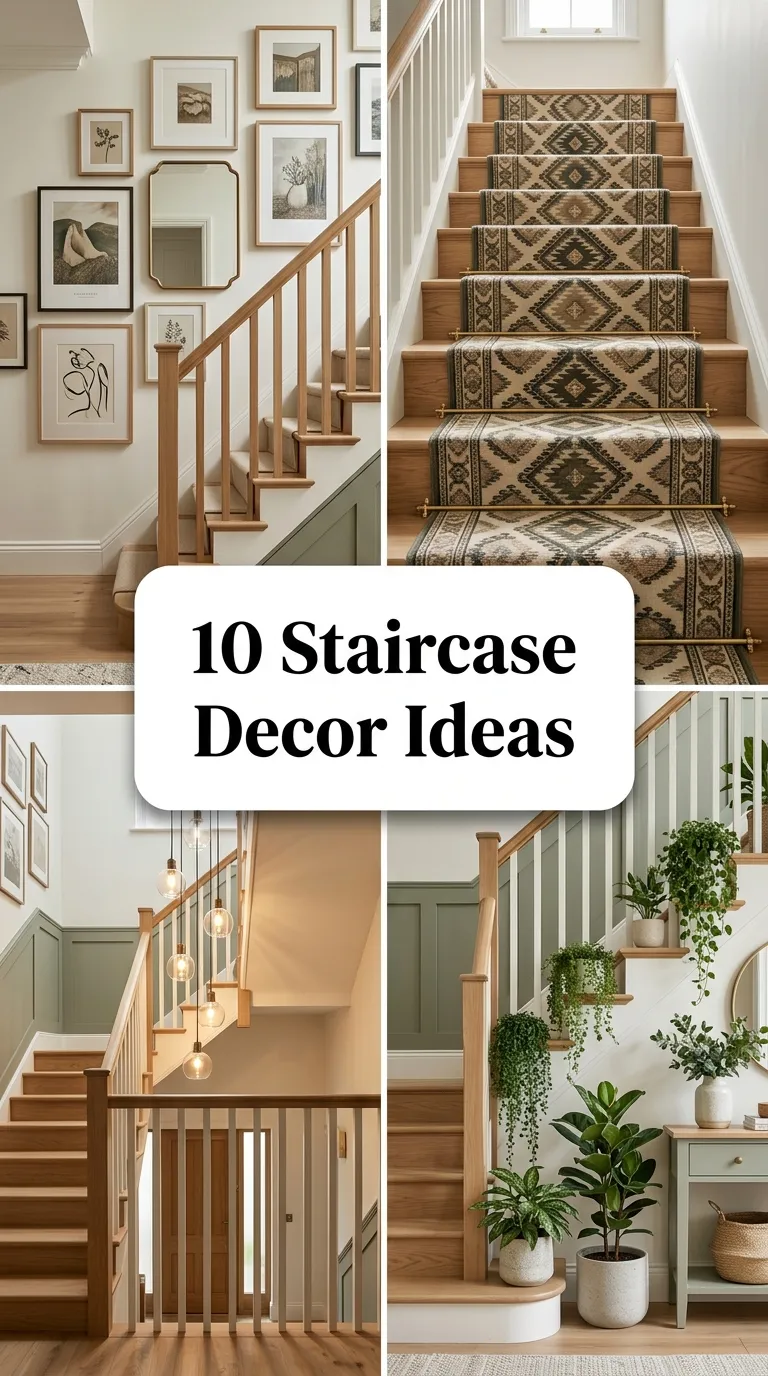
10 Staircase Decor Ideas
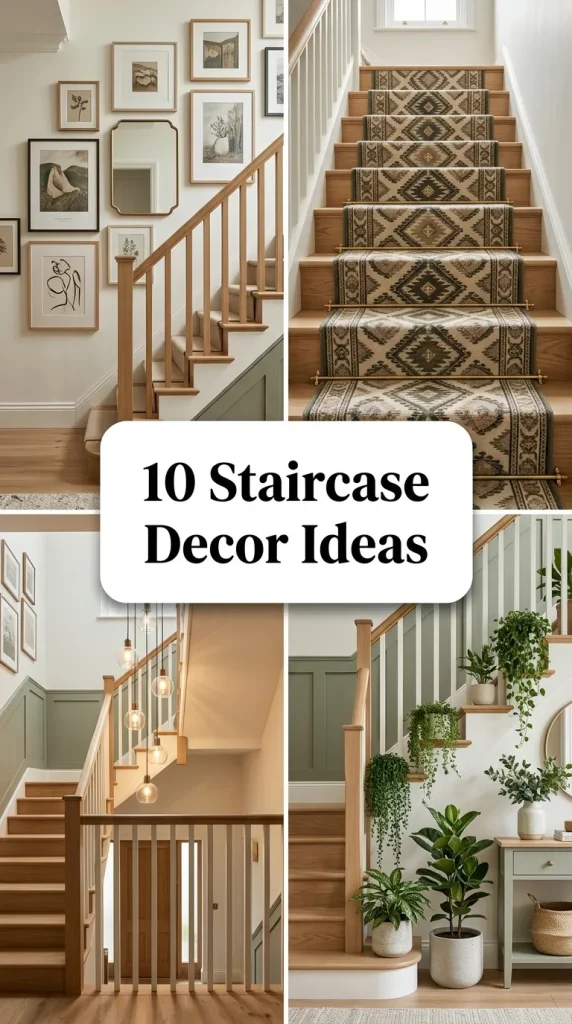
Staircase Decor Ideas
Upgrading a residential staircase requires a structured understanding of architectural proportion, vertical wall utilization, and pathway lighting. On popular visual discovery networks like Pinterest, curated staircase decor ideas serve as essential design blueprints for converting plain transition corridors into highly sophisticated focal centerpieces. Readers will learn how to analyze wall angles, balance ascending gallery displays, implement durable runner textiles, and install low-profile illumination fixtures with absolute geometric precision. Successfully navigating the structural details of steps, risers, and handrails allows homeowners to create layout configurations that feel spacious, organized, and structurally authentic. This comprehensive manual delivers ten practical staircase styling concepts that operate smoothly as accessible creative project templates, regardless of your current home decor background. By prioritizing clean geometric lines and deliberate color coordination, these targeted strategies transform standard residential stairs into high-end architectural features that follow contemporary modern design principles.
The current movement in urban interior decoration places massive value on high-utility architectural accents that streamline internal layout organization while reinforcing a clean, minimalist style throughout the property. Specially curated staircase staging systems have emerged as prominent trending ideas because they resolve common interior layout limitations, such as dark uninspired vertical corridors, scuffed step risers, and blank wall voids, without requiring structural staircase rebuilding. The practical value of establishing a dedicated, highly organized staircase layout lies in its capacity to maximize vertical wall utility while fostering a serene, clutter-free atmosphere that improves everyday household navigation. For beginners, executing a basic picture ledge installation or applying a peel-and-stick riser pattern provides an exceptionally manageable DIY project that introduces a high aesthetic impact with a low initial financial investment. This disciplined styling approach pairs direct daily utility with essential material durability, providing excellent inspiration for creative home organization and future structural planning. Implementing these handmade concepts allows individuals to personalize their immediate living quarters while preserving a highly polished presentation.
Successful execution of a comprehensive staircase decoration project depends entirely on thorough substrate preparation and gathering appropriate installation tools before mounting any hardware or applying paints. Required materials and tools generally include heavy-duty wall anchors, measuring tapes, laser levels, non-slip stair tread adhesives, cordless drills, painter’s masking tape, fine-grit sandpaper blocks, microfiber cleaning cloths, and durable low-profile picture frames. Planning considerations must strictly prioritize maintaining unobstructed physical clearances along the entire flight of steps, ensuring that all wall-mounted frames and light fixtures leave ample headroom for daily movement. Measuring the exact vertical rise and horizontal run dimensions of each step prevents alignment errors during subsequent runner and tile installation phases. Clearing away dust residues, repairing minor wooden squeaks, and establishing a single, cohesive color palette guarantees a balanced step by step tutorial workflow that anchors your design smoothly into the home landscape.
1. Linear Sconce Illumination Grids
Step-by-Step Guide
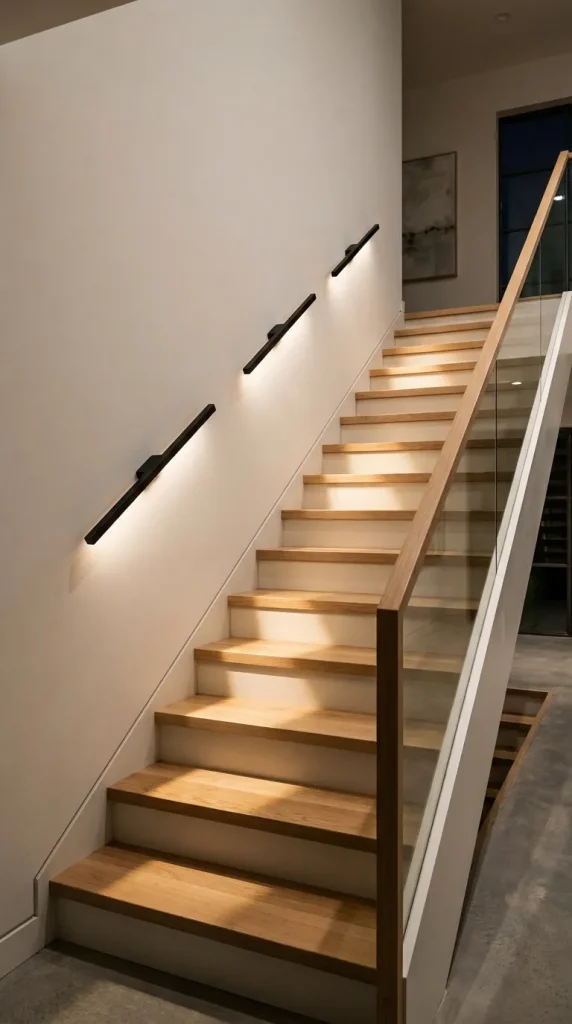
Configuring a linear sconce illumination grid relies on mounting low-profile, hardwired or battery-operated LED light fixtures at regular ascending intervals along the primary staircase wall. To execute this creative project, measure the entire slope angle of the staircase using an electronic laser level, establishing a consistent reference line positioned thirty-six inches above the tread nosing. Mount three to four matching minimalist style matte black or brushed brass wall sconces along this diagonal path, spacing the fixtures evenly apart to illuminate every third step landing. Connect the internal wiring to a low-voltage circuit or install rechargeable magnetic LED pucks inside the sconce housings to avoid complex electrical alterations. The downward-directed illumination casts soft, geometric light pools across each wooden step tread, completely eliminating dangerous shadow pockets while accentuating the architectural contours of your home. This structured installation delivers exceptional safety and aesthetic refinement, serving as an ideal beginner friendly upgrade.
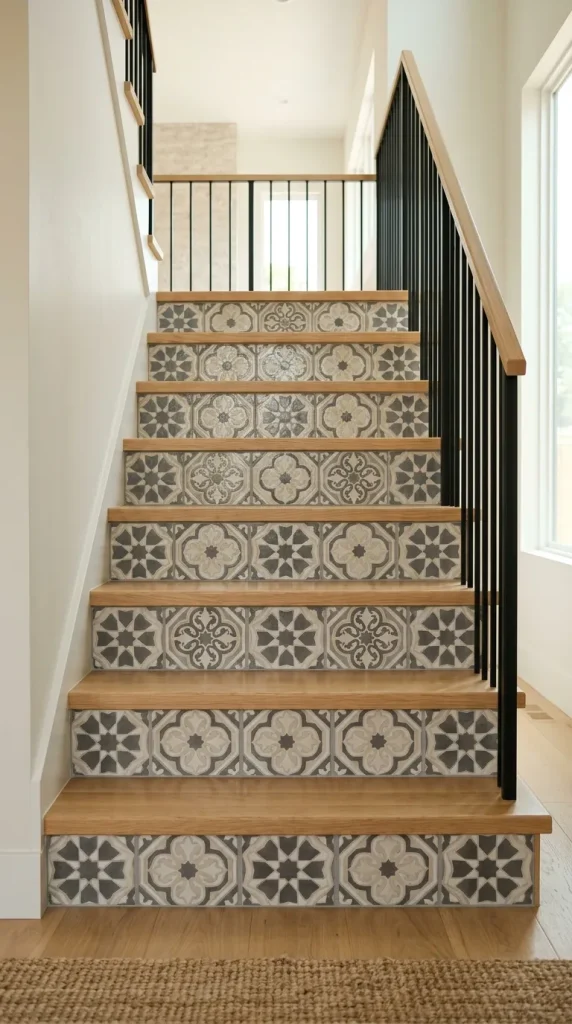
2. Geometric Tile Riser Inlays
Setup Method
Plain painted stair risers frequently accumulate unsightly scuff marks from daily footwear impacts, making the entire staircase look worn and unmaintained over time. Resolve this presentation bottleneck by applying high-durability peel-and-stick vinyl tiles or handmade ceramic Moroccan mosaic slabs directly onto each vertical riser face. Measure the exact height and width of each individual step riser, using a sharp utility knife and a straightedge to slice the decorative tile sheets to precise rectangular dimensions. Thoroughly scrub the wooden riser surfaces with mineral spirits to remove oils and dirt residues before pressing the adhesive backing firmly against the wood grain. Roll a hard rubber seam roller across the newly tiled surfaces to ensure maximum bonding contact and eliminate trapped air bubbles. This hardwearing decoration adds rich visual texture to an otherwise blank surface, transforming every upward step into an eye-catching focal feature that resists everyday scuffing.
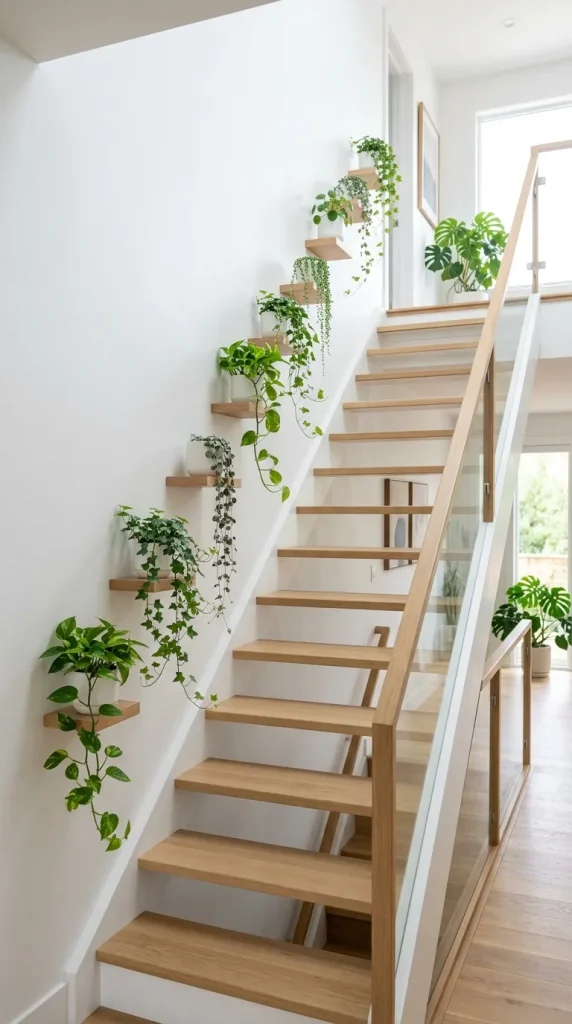
3. Ascending Botanical Hanging Ledges
How to Create
Incorporating natural greenery into a multi-level vertical corridor introduces an organic, refreshing contrast against the hard angular lines of traditional wooden steps and drywall. Construct a series of small, six-inch-deep floating wood ledger shelves crafted from sealed white oak or cedar planks, mounting them sequentially along the upper wall studs. Position each small plant shelf at an elevation that mirrors the natural upward incline of the staircase steps, ensuring the ledges remain safely above adult shoulder clearance heights. Place low-maintenance, trailing indoor plant varieties such as golden pothos, heartleaf philodendron, or string of pearls inside matching matte white ceramic pots on each ledge. The cascading green foliage drapes downward smoothly along the wall, creating a living vertical botanical garden that softens the interior architecture. This easy project represents an exceptional way to introduce vibrant textures without restricting valuable walking width.
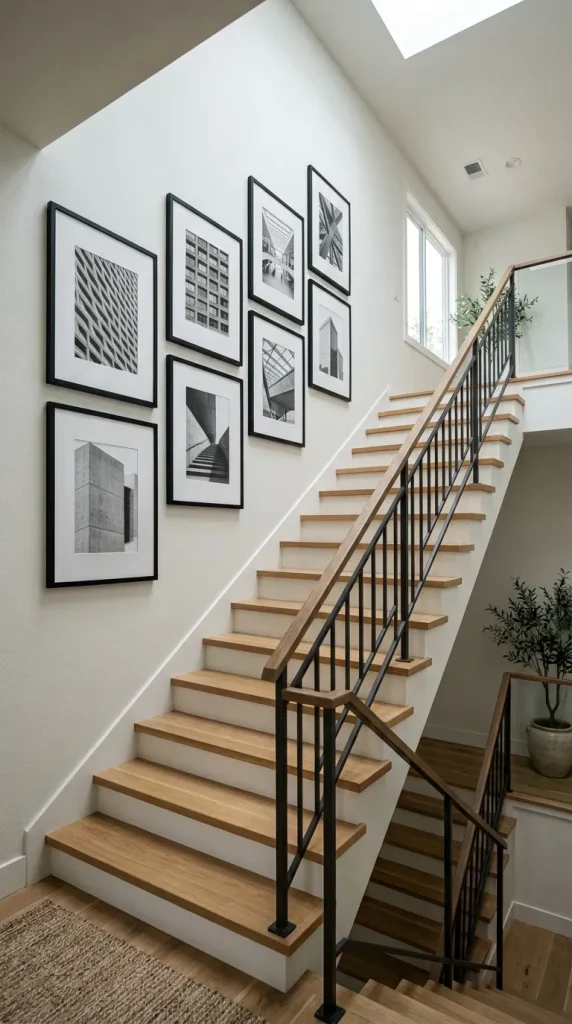
4. Monochromatic Gallery Wall Clusters
Execution Process
Displaying personal art collections or family portraits along an ascending staircase wall can easily look chaotic if the frames lack a disciplined geometric structure. Eliminate this visual confusion systematically by organizing a cohesive monochromatic gallery wall utilizing identical rectangular frames and oversized white mat boards. Align a laser level along the staircase stringer to establish a clean forty-five-degree diagonal baseline, positioning the center points of your largest picture frames exactly sixty inches above the step line. Hang a grid of eight matching black or natural timber frames along this diagonal axis, ensuring an exact two-inch spacing gap between adjacent frames throughout the entire gallery. Fill the frames with high-contrast black-and-white architectural photographs or minimalist line art prints to maintain a unified, uncluttered visual rhythm. This structured arrangement draws the eye upward smoothly, turning an uninspired transit zone into a refined home art exhibition.
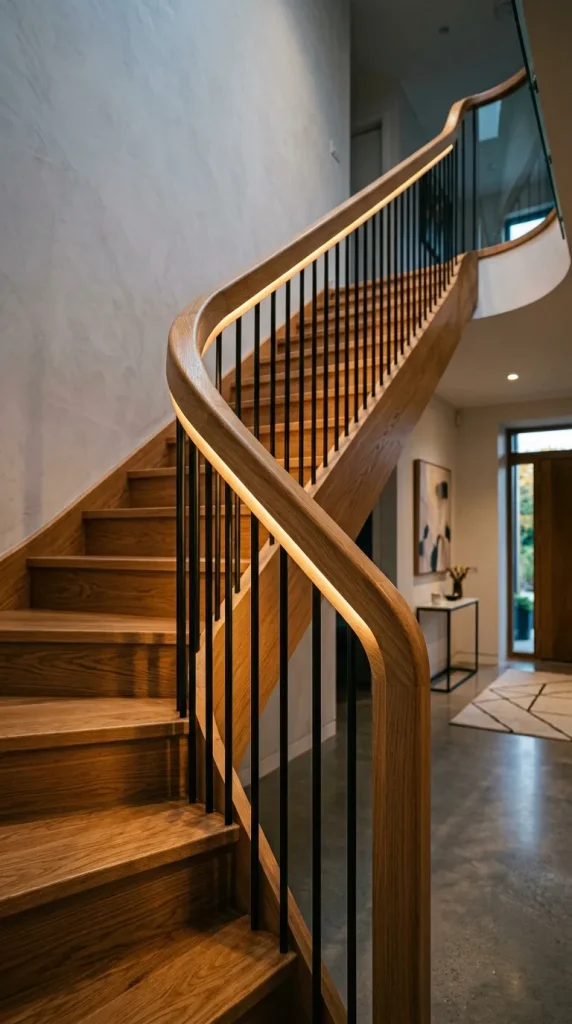
5. Continuous Under-Rail LED Strips
Step-by-Step Guide
Installing a continuous hidden light channel directly underneath your staircase handrail creates a striking, modern floating effect while providing essential nighttime pathway visibility. Source a high-density, flexible COB LED light strip that emits a warm white light temperature of twenty-seven hundred kelvins. Rout a shallow, quarter-inch-deep channel along the underside center line of your wooden handrail, or secure a sleek aluminum diffuser profile directly beneath the railing using low-profile mounting clips. Press the adhesive-backed LED tape smoothly into the track, connecting the low-voltage power supply to a hidden wall receptacle or an integrated motion sensor base. When activated, the continuous line of diffused light washes down over the spindles and steps without producing harsh glare or visible hot spots. This modern design choice provides magnificent inspiration for high-end residential interiors, elevating simple safety railings into sleek architectural lighting elements.
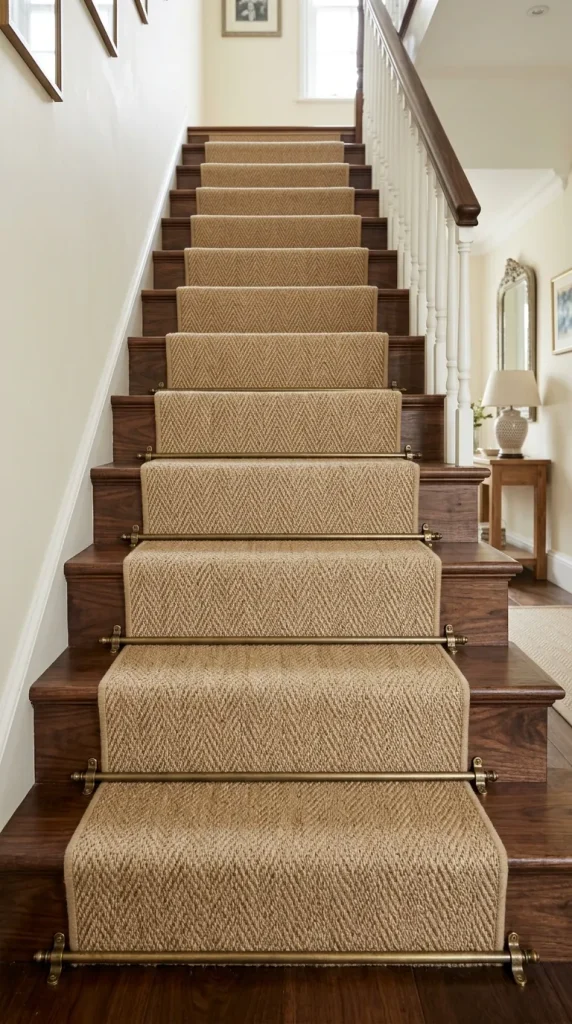
6. Textured Sisal Stair Runners
Setup Method
Uncovered hardwood steps can create excessive echo within open-concept homes while presenting a slick, slippery surface for young children and pets. Upgrade the physical safety and acoustics of your staircase by installing a continuous, tightly woven natural sisal or herringbone wool runner carpet down the center flight. Secure heavy-duty rubber underlayment pads onto each step tread using a staple gun, leaving a uniform three-inch border of exposed wood on both the left and right sides. Roll the textured sisal carpet over the top nosing, securing the fabric tightly into the ninety-degree junction where the tread meets the riser using pneumatic finish staples. Install decorative antique brass stair rods across the base of each step riser to pin the carpet firmly in place and introduce an elegant metallic accent. This handmade installation compresses sound vibrations while adding rich tactile warmth to your living environment.
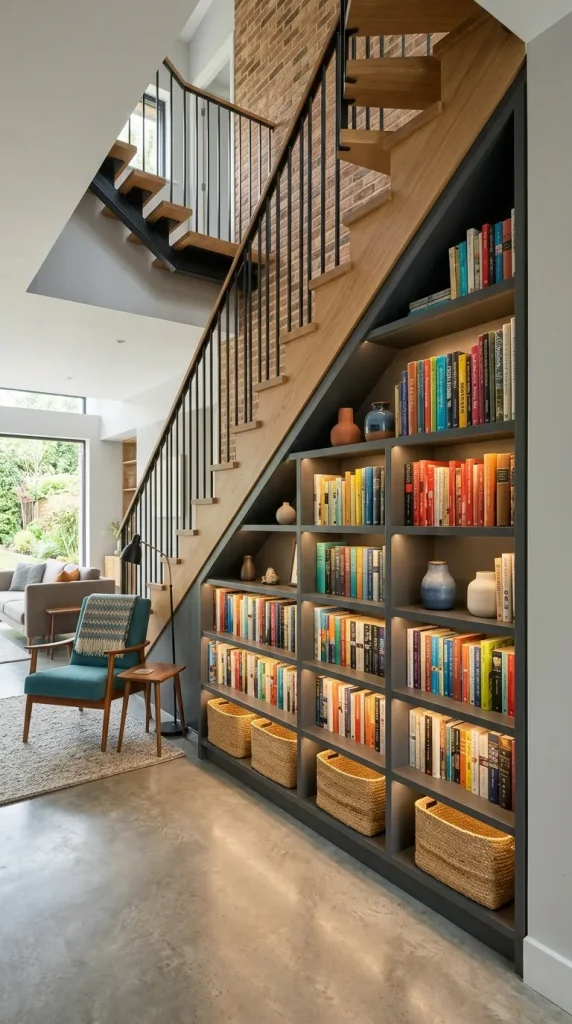
7. Under-Stair Built-in Nook Bookcases
How to Make
The triangular void situated beneath an open staircase often becomes wasted space or a cluttered catch-all zone for miscellaneous household items. Convert this structural recess into a high-capacity custom storage library by framing out built-in horizontal bookcases directly into the under-stair cavity. Construct a series of stepped, open-concept shelving compartments using three-quarter-inch birch plywood panels, securing the vertical dividers firmly to the existing floor joists and wall studs. Paint the interior shelving cavities in a deep charcoal gray or rich navy blue to establish a striking high-contrast shadowbox effect against lighter exterior trim. Arrange your favorite hardcover books, decorative ceramic vases, and small storage baskets neatly across the custom cubby grid. This functional organization project maximizes every square inch of your floor plan, converting an awkward structural void into a practical, visually stunning home library station.
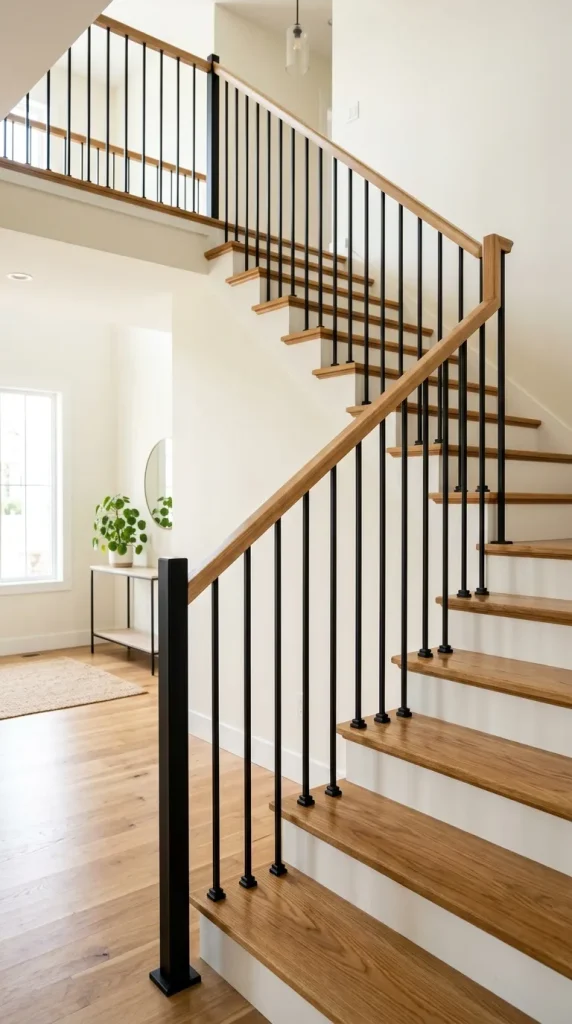
8. Minimalist Matte Black Spindle Conversions
Execution Process
Outdated, ornately turned wooden stair balusters can make an entire entryway feel dated and visually heavy within a contemporary home setting. Modernize your structural safety barriers cleanly by replacing traditional wooden spindles with sleek, square-profile matte black wrought iron or powder-coated steel balusters. Remove the old wooden spindles carefully by cutting them through the center with a reciprocating saw and unscrewing the mounting dowels from the tread bases. Install modern metal shoe collars over pre-drilled holes in the stair treads and handrail underside, sliding the new black iron balusters into place securely. Fasten the set screws tightly inside each metal collar to eliminate rattling and ensure rock-solid structural stability. The clean vertical lines of the black spindles create a light, transparent visual barrier that opens up sightlines, instantly modernizing the overall aesthetic of your entryway.
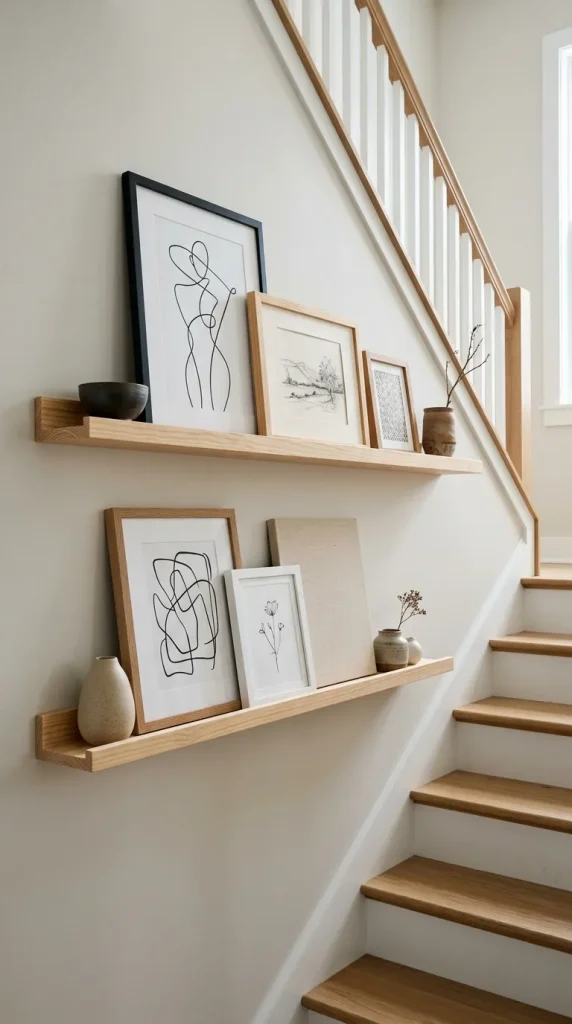
9. Floating Picture Ledge Overlaps
Setup Method
Hammering dozens of individual nail holes into an ascending staircase wall limits your ability to rotate seasonal artwork and decorative prints easily. Resolve this flexibility limitation by installing two overlapping, shallow wooden picture ledges mounted parallel to the staircase incline. Secure two four-foot-long pine picture ledges directly into the wall studs using three-inch drywall screws, ensuring the lip of each shelf is level and positioned forty-eight inches above the step nosings. Lean a curated assortment of framed prints, canvas art boards, and small sculptural objects along the ledges, overlapping the frame edges slightly to generate layered physical depth. This adaptable arrangement allows you to swap, rearrange, or update your decorative artwork in minutes without damaging the underlying wall plaster. The continuous horizontal shelves guide the eye naturally along the stairs, creating a casual yet curated gallery presentation.
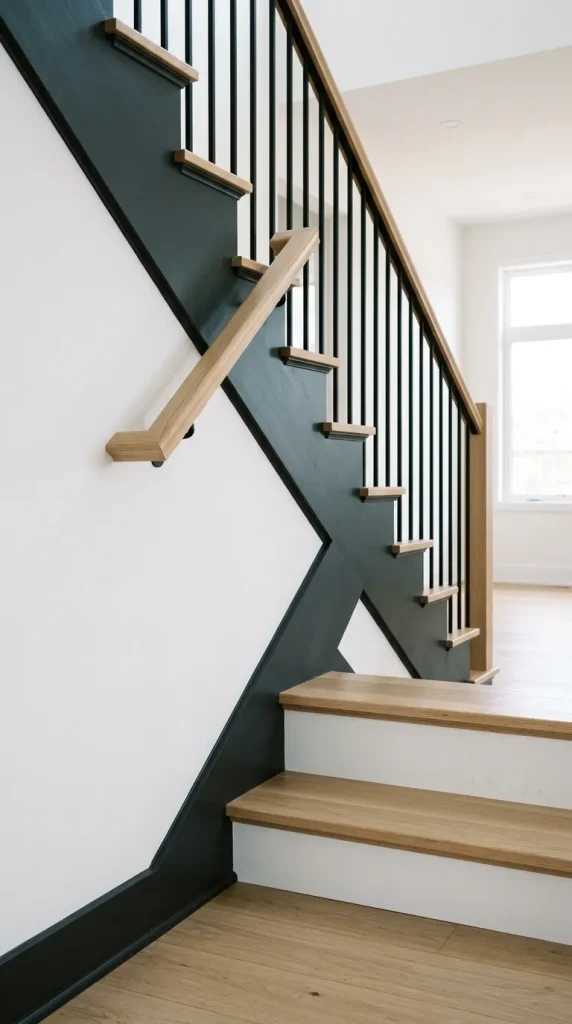
10. Contrast Painted Baseboard Skirting
How to Create
Applying a bold, contrasting paint color to the diagonal stair skirt board and outer stringers provides a crisp architectural outline that frames your steps beautifully. Clean the wooden skirt board thoroughly before sanding away old clear coats with medium-grit sandpaper to promote maximum paint adhesion. Apply two coats of high-adhesion interior primer, followed by two layers of premium satin-finish paint in a dramatic accent tone such as deep iron ore, rich emerald green, or warm walnut black. Keep your paint lines razor-sharp along the adjoining drywall and step edges by utilizing premium low-tack painter’s masking tape sealed with a light line of base paint. This targeted paint application defines the structural silhouette of the entire staircase, creating a high-contrast boundary that makes white walls and natural wood treads pop with modern elegance.
Common Beginner Mistakes and How to Avoid Them
A primary mistake when executing staircase decoration projects is hanging artwork or decorative ledges too low or too close to the handrail clearance zone. Placing bulky frames within the natural swing path of carrying laundry baskets or moving furniture results in bumped shoulders, crooked frames, and broken glass. Avoid this common layout trap by maintaining a minimum vertical clearance of at least thirty-six inches between the top of the handrail or step nosing and the bottom edge of any wall-mounted decor. Another frequent error is using standard smooth rugs or un-padded carpet runners without adequate physical fastening mechanisms. Loose fabric placed on high-incline stairs poses a severe slip hazard for household occupants. Always use heavy-duty non-slip rug pads underneath runner carpets, and secure the edges firmly into every step corner using pneumatic finish staples and dedicated metal stair rods.
Practical Tips for Better Results
Achieving a flawless, professional-grade finish with contemporary staircase projects relies heavily on establishing a consistent diagonal reference plane before installing any hardware. Always set up a self-leveling cross-line laser level at the base of the staircase, projecting a crisp illuminated guideline that matches the exact angle of the step nosings up to the landing. Align the bottom edges of all picture frames, sconces, and floating ledges strictly to this laser guideline to ensure a harmonious, symmetrical ascension across the entire wall space. Additionally, when painting step risers or wooden balusters, always select high-durability enamel or satin-finish paints designed specifically for high-traffic woodwork. Flat and matte paints absorb skin oils and dirt rapidly, making them difficult to clean without leaving behind shiny, burnished wear spots over time.
Styling, Presentation, or Organization Ideas
Properly coordinating your staircase decor selections with modern design principles ensures your personal environment looks polished, highly intentional, and visually balanced from every viewing angle. Choose styling accessories that share a single texture family or color palette, such as pairing natural oak floating ledges with matching light birch picture frames across the ascending wall. This visual uniformity prevents multi-level wall arrangements from looking cluttered, turning a basic transition hallway into an attractive aesthetic feature that supports your overall property design theme. When organizing decorative objects along under-stair bookcases or floating display shelves, employ the rule of thirds by mixing functional hardcover books with small potted green ferns or minimalist ceramic sculptures. Keep the immediately surrounding floor boundaries entirely clear of loose item drops, utilizing clean runner carpets to frame the staircase base beautifully.
Budget or Time Planning
Upgrading your residential staircase infrastructure does not require hiring an expensive interior design contractor or investing massive financial sums into complex carpentry overhauls. Simple modifications like applying peel-and-stick tile decals to step risers or painting the skirt board in a rich contrast color are highly effective budget ideas that require basic hand tools and a single weekend afternoon of focused manual work. A standard gallery wall installation or runner carpet addition typically requires less than three hours of active execution time from start to finish, including measuring, leveling, and hardware fastening phases. Setting aside an organized session allows you to complete your preparation and painting steps systematically before finalizing hardware attachments. Allocating a specific portion of your project budget toward heavy-duty wall anchors and premium satin enamel paints ensures long-term physical safety and finish durability.
Creative Expansion and Advanced Inspiration
Once your core staircase decor layouts are fully operational and mastered, you can elevate the space by incorporating advanced technical components like smart motion-activated step sensors. Installing tiny, flush-mounted infrared sensors at the top and bottom step landings can automatically trigger under-rail LED lighting strips whenever someone approaches the stairs in low-light conditions. This advanced modification highlights the clean structural contours of your handmade carpentry work, turning functional transition paths into striking architectural features after dark without creating blinding glare. Another progressive design concept involves coupling your ascending gallery wall with custom vertical wood slat paneling running floor-to-ceiling behind the frames. Exploring these unique material adjustments allows homeowners to craft a highly sophisticated, adaptive environment that perfectly balances daily ergonomic safety with forward-thinking minimalist design trends.